English

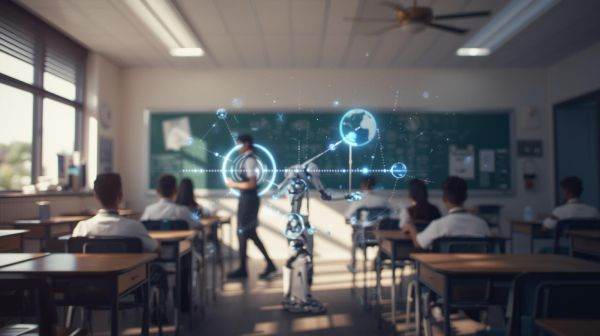
The increasingly widespread use of Artificial Intelligence (AI) in education risks emptying the learning process of meaning if it is not framed by clear institutional rules, warns the rector of the West University of Timişoara (UVT), Marilen Pirtea. In the absence of firm pedagogical guidelines, AI can accelerate practices that affect the development of critical thinking, intellectual autonomy and the authentic relationship between teachers and students. The UVT Rector's statements come in the context of global debates on the impact of AI on educational systems, but also of the adoption, earlier this year, of an internal regulation that establishes the ethical and pedagogical framework for the use of generative Artificial Intelligence in the university's educational process.
• UVT, regulation and responsibility
The West University of Timisoara is "up to date” in terms of the ethical use of Artificial Intelligence, claims Marilen Pirtea. The UVT Senate has adopted a regulation that formalizes the rules regarding the use of generative AI in education, with the aim of preventing slippages and integrating the technology deliberately, on solid pedagogical grounds. The rector emphasizes that AI has real educational potential, but its uncontrolled use risks undermining the very foundations of learning. His analysis starts from the conclusions of the report "A New Direction for Students in an AI World: Prosper, Prepare, Protect”, published in January 2026 by the Center for Universal Education within the Brookings Institution.
• AI reached students before school
The Brookings report highlights a major gap: Artificial Intelligence has entered students' lives faster than in schools. Tools such as generative linguistic models are already used by children and young people for homework, explanations, emotional support or even socialization, often outside any educational or normative framework. "The authors of this material do not propose a retrospective analysis, but a prospective exercise, aimed at identifying the negative effects of the use of AI on children and young people in advance”, emphasizes the UVT rector. The stakes are high, as AI is no longer a marginal technology, but an everyday presence, with a direct impact on the way cognitive and social skills are formed. The report draws attention to the fact that learning is not an exclusively cognitive process, but a deeply social and emotional one, dependent on relationships with teachers and peers, motivation, self-regulation and meaning.
• The risk of externalizing thinking
One of the most sensitive points highlighted by rector Marilen Pirtea is the danger of "externalizing thinking” to algorithms. "Outsourcing thinking to algorithms can affect the development of students' basic cognitive skills, and intense interaction with artificial systems risks weakening the human relationships that underpin education in schools,” he warns. While AI can expand access to education, support neurodivergent students, personalize learning, and free up time for teachers, these benefits only occur when the technology is integrated deliberately and responsibly. In the absence of clear frameworks, the risks tend to outweigh the benefits. These include dependency on AI tools, diminishing critical thinking, affecting socio-emotional development, eroding trust in school, and deepening educational inequalities.
• Universities called to redefine learning
Similar tensions are also identified in the academic environment, where the use of AI has quickly become normalized. Students use Artificial Intelligence tools for writing, synthesis, or preparing assessments, and teachers use them for planning, feedback, or evaluation. "The central risk comes from the shift of cognitive effort towards Artificial Intelligence tools and the tacit redefinition of what constitutes authentic learning,” says the UVT rector. Without clear rules, AI can encourage "academic survival strategies” to the detriment of critical thinking and the teacher-student pedagogical relationship. In this context, universities are called not only to quickly regulate the use of AI, but to reflexively integrate it into their educational mission, clarifying which skills need to be developed in a technology-assisted world and which role remains exclusively human in teaching, assessment and mentoring.

























 Euro
Euro Dolar SUA
 Franc elveţian
 Liră sterlină
 Gram de aur