English


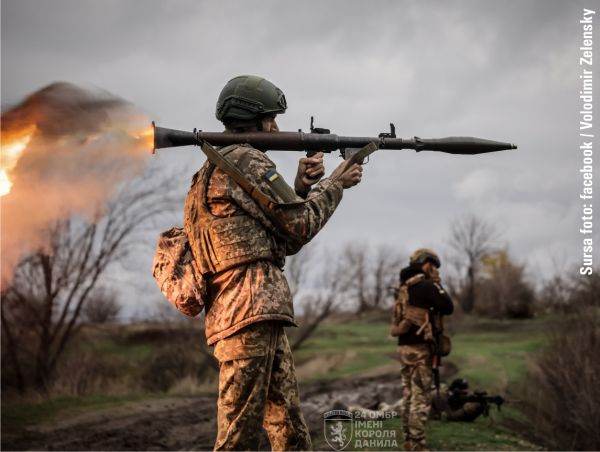
The military and humanitarian support provided to Ukraine in recent years represents the largest Western effort to support a country under aggression since the Cold War. We are talking about a mix of weapons, ammunition, training, budget financing, emergency aid, refugee reception and economic mechanisms designed to keep Ukraine afloat, while Russia is methodically trying to pull it out of the power socket, energetically, logistically, institutionally and demographically.
In total, according to data from the EU Council, the community bloc's support for Ukraine consists of: 103.3 billion euros in financial, economic and humanitarian support, 69.3 billion euros in military support, 17 billion euros for supporting refugees within the EU and 3.7 billion euros from income generated by frozen Russian assets. In the same logic of "keeping the state alive", between 2022 and 2026, the EU granted 43.3 billion euros in macro-financial assistance (loans and grants) to Ukraine, to pay, month by month, for its basic societal functions.
Furthermore, the EU built a multi-annual framework - the Ukraine Facility, an instrument that entered into force on March 1, 2024 and offers up to 50 billion euros for the period 2024-2027, divided into 17 billion grants and 33 billion loans, precisely to avoid Ukraine being left, periodically, in liquidity crises, depending on electoral cycles or political deadlocks.
In parallel, the member states of the community bloc have pushed military support into an industrial and lasting area: training, equipment, ammunition, repairs, logistics. The EU Military Assistance Mission to Ukraine (EUMAM), for example, has euro610 million in funding through the European Peace Facility for common training costs and training-related equipment.
In these circumstances, the Institute for World Economics in Kiel, Germany, found that in 2025, the share of financial and humanitarian aid allocated to EU institutions had increased massively, reaching 90% of European allocations in this category, meaning that Brussels has effectively become a major donor to Ukraine, not just a political coordinator.
On the other hand, the Council on Foreign Relations notes that since the beginning of the war, the US Congress has passed five major support bills, with a total of $175 billion in "budget authority”, the most recent being in April 2024. At the same time, USAFacts shows that the US has allocated $182.8 billion in emergency funding to support Ukraine and the region, in an accounting that also includes elements related to the US effort, not just direct supplies. For the strictly military component, the State Department indicates that the US has provided $66.9 billion in military assistance since the launch of the full-scale invasion (February 24, 2022), a figure that sets the orders of magnitude of the US role in equipping and supporting Ukrainian forces.
However, according to a CEPA analysis report, while the US allocated $175.1 billion in additional funding in 2022-2024, through supplementary funding-type acts, in 2025, during the new Trump Administration, there was no additional allocation of the same type, which pushed the EU to cover the funding gaps.
Some of the gaps were also covered by the UK. According to data available on the UK Parliament website, the UK has allocated £21.8 billion in support for Ukraine, of which £13.06 billion in military funding. These data are identical to those of the UK government, which shows a total allocation for Ukraine, from 2022 onwards, of £21.8 billion, of which £13 billion in military support, £5.3 billion in non-military support, plus export financing facilities (reconstruction and defence projects).
Canada, although less visible in the daily European headlines, has entered the logic of predictable support, with an emphasis on the ability to sustain the effort for years, not weeks. Canada's Department of National Defence notes that, since the beginning of 2022, Canada has committed 6.5 billion Canadian dollars in military assistance to Ukraine, funding that allows the delivery of support until 2029. On the humanitarian dimension, Global Affairs Canada shows that, since January 2022, Canada has committed 396.85 million Canadian dollars in humanitarian assistance to respond to the impact of the invasion on Ukraine and neighboring countries. The humanitarian component, often swallowed up by the debate about weapons, has an equally strategic role: it maintains the population, reduces the pressure of forced migration, stabilizes cities, keeps schools and hospitals alive, provides rapid repairs after attacks on energy networks. And when humanitarian resources are stretched thin, the effects are immediately visible. The Associated Press reported yesterday, citing the UN High Commissioner for Refugees, that the UNHCR's $470 million appeal for Ukraine has raised only $150 million, a sign that there is a parallel front of civilian needs, which remains underfunded and which may turn resilience into exhaustion.



















 Euro
Euro Dolar SUA
 Franc elveţian
 Liră sterlină
 Gram de aur