English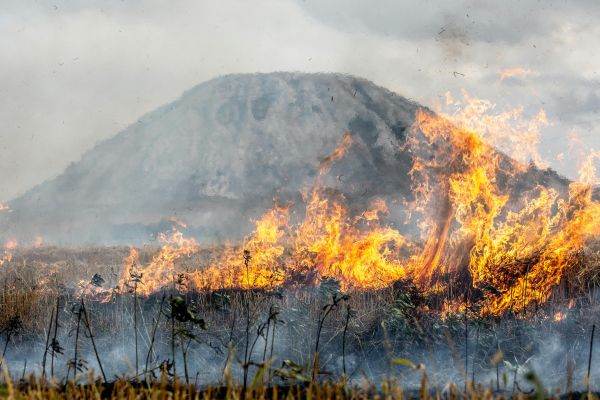
Prenatal exposure to wildfire smoke may be associated with a higher risk of being diagnosed with autism spectrum disorders in the early years of life, according to a study published recently and cited by Xinhua. The research adds an important piece to a complex scientific puzzle investigating the relationship between air pollution and early neurological development.
The study, published in the journal Environmental Science & Technology, looked at a large group of pregnant women in Southern California who were monitored for eight years, from 2006 to 2014. The researchers estimated prenatal exposure to wildfire smoke and associated fine particulate matter (PM2.5) based on the mothers' home addresses during pregnancy. These estimates were then correlated with diagnoses of autism spectrum disorders in children up to the age of five, using a "time-to-event” statistical model, commonly used in epidemiological studies to assess risks over time. The authors show that the association between wildfire smoke exposure and autism risk was strongest in the third trimester of pregnancy, a critical stage for fetal brain development.
The results became clearer when exposure was assessed not only by the average PM2.5 concentration, but also by the number of days or episodes of wildfire smoke. This approach suggests that the duration and frequency of exposure may be as important as the intensity of pollution.
In a sensitivity analysis, limited to mothers who did not change their address during pregnancy, the researchers found that third-trimester exposure to more than 10 days of smoke was associated with a relative risk of 1.225 compared with no exposure days. Smaller increases in risk were also observed for fewer days of smoke.
• A phenomenon with extensive regional impact
The findings are particularly relevant to the Los Angeles metropolitan area, where smoke from wildfires can travel long distances, affecting communities tens or even hundreds of kilometers from active outbreaks. Even when fires occur outside city limits, air currents can carry fine particles into the Los Angeles Basin, exposing urban populations to repeated episodes of severe pollution.
The study is part of a larger body of research that suggests a link between air pollution and autism risk. A meta-analysis published in 2021 by Harvard University's T.H. Chan School of Public Health also reported an increased risk of autism associated with exposure to PM2.5, with a more pronounced prenatal effect in the third trimester of pregnancy. However, the researchers emphasize the inherent limitations of observational studies. Such analyses can identify correlations, but cannot prove direct causation. Also, estimating exposure based on home address does not fully capture relevant individual behaviors, such as time spent indoors, use of air purifiers, or other sources of pollution.

























 Euro
Euro Dolar SUA
 Franc elveţian
 Liră sterlină
 Gram de aur