 English

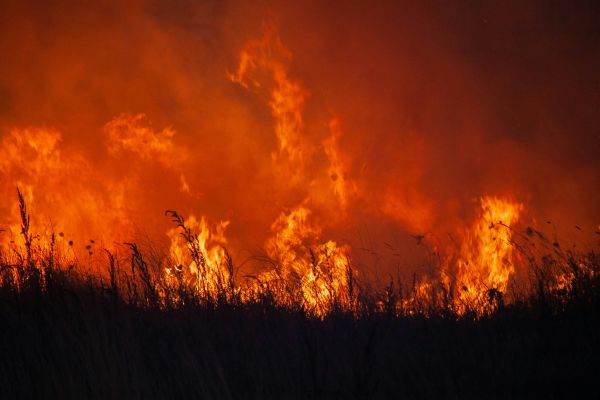
Smoke from wildfires caused an average of 24,100 deaths a year in the United States between 2006 and 2020, according to a study published in the journal Science Advances. The authors of the study warn that the scale of the phenomenon makes wildfires a major public health problem and calls for urgent changes in U.S. climate policy. "That's a very large number,” said Min Zhang, the study's lead author and a researcher at Mount Sinai School of Medicine in New York, underlining the gravity of the findings. She called the impact of wildfire smoke "a very concerning public health issue.” The new estimate is more than twice the 11,415 annual deaths reported in 2024 in the journal PNAS, suggesting that the true effects of smoke exposure have been underestimated so far.
• Fires, increasingly frequent amid global warming
Global warming has favored the expansion of forest fires, which have become more frequent, more intense and longer. In this context, the effects of prolonged exposure to fine particles in smoke on human health remain insufficiently known. The study comes at a time when the administration led by Donald Trump has abandoned some of the policies to combat climate change, opting to support the fossil fuel industry, considered the main responsible for increasing global temperatures.
However, "the US government knows what it needs to do to fight climate change: promote clean energy, electric cars and increase funding for research," said Yaguang Wei, assistant professor at the Mount Sinai School of Medicine. Local authorities should develop early warning systems to anticipate the arrival of toxic smoke and install air filters in homes, schools, offices and hospitals, he added.
• The brain, more vulnerable than previously thought
For the study, the researchers developed a method that allows them to isolate the cumulative effects of fine particles generated by wildfires. They analyzed annual mortality data from more than 3,068 US counties, excluding the states of Alaska and Hawaii, and correlated them with satellite images. After eliminating other factors that could have influenced mortality rates, the results indicated a significant increase in smoke-related deaths. The most common conditions identified were dementia, Parkinson's disease and circulatory system diseases. "Generally, people associate fire smoke with cardiovascular and respiratory diseases. However, we found that neurological diseases were more prevalent," explained Yaguang Wei. "The brain seems to be the most vulnerable part." The effects are more pronounced in rural areas, closer to the fire outbreaks. Among the population, young people are more exposed, probably because they spend more time outdoors. Temperatures also play an important role: cooler summers lead people to spend more time outdoors, while very cold winters favor the stagnation of smoke in the atmosphere, increasing exposure.


























 Euro
Euro Dolar SUA
 Franc elveţian
 Liră sterlină
 Gram de aur





























