English

In a context of extreme budgetary pressure, marked by the obligation to reduce the public deficit from almost 8% of GDP to below 3% by 2031, the Government is deliberately shifting the center of gravity of public financing towards local level, not through declarative austerity, but through a structural repositioning of income sources and mechanisms for using public assets, according to a draft law posted in decisional transparency on the website of the Ministry of Development, Public Works and Administration. Practically, through the respective draft normative act, local authorities are transformed from simple administrators dependent on central transfers into active fiscal actors, with direct access to recurring, predictable and legally consolidated revenues.
The Government's legislative initiative proposes one of the most extensive reconfigurations of the fiscal relationship between citizens, local authorities and the state in recent years, combining measures to increase the revenues of administrative-territorial units with control, sanction and collection instruments that significantly expand the capacity of local administrations to identify, tax and track assets, revenues and outstanding obligations. Beyond the technical formulations, the project outlines an explicit fiscal philosophy: broadening the tax base, eliminating gray areas in local records and using all available administrative and technological levers to transform property, economic activity and mobility into a fully traceable fiscal circuit
• Owners of buildings without a construction permit, subject to overtaxation
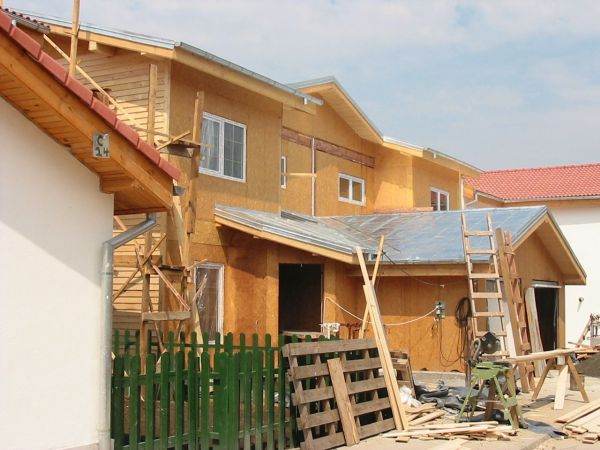
One of the most sensitive and with a direct impact on the population is the regulation on buildings built without a construction permit or in violation of it. The project eliminates any ambiguity regarding the declaration obligation and introduces a punitive fiscal regime, distinct from sanctions in the field of construction discipline. The proposed text explicitly establishes that "declaring buildings for taxation purposes and registering them in the records of local public administration authorities is a legal obligation of taxpayers who own these buildings, even if they were built without a building permit or in violation of it", and failure to declare attracts successive tax increases, "by 30% for each delay interval or fraction of a 6-month delay interval"
Beyond this gradual mechanism, the project introduces a substantive tax penalty, with long-term effect, by doubling the tax over an extended period. The text of the law provides unequivocally: "For works carried out without a building permit, except for those built before August 1, 2001, the tax value is calculated in relation to the area of the building constructed and a tax is established increased by a rate of 100% compared to the tax value established according to the law, for a period of 5 years, starting with the year following the finding"
Practically, the owners of unauthorized buildings enter a tax regime of continuous penalty, which is added to the other administrative and contraventional consequences.
So that these measures do not remain theoretical, the project grants local authorities extensive tools for identifying and testing undeclared constructions, including through the use of aerial surveillance technologies. The text explicitly states that "in order to identify buildings built with or without a building permit and not registered in the tax records, local public administration authorities carry out inspections both on the ground and based on satellite images, photogrammetry or by using unmanned aircraft (drones)", and "the images obtained can be used as evidence for the application of sanctions regarding construction discipline and for the ex officio imposition of buildings"
This mechanism, correlated with access to ANCPI data and with the interoperability of systems, moves real estate taxation into a permanent control area, in which voluntary declaration is replaced by active identification.
The project strengthens, in parallel, fiscal control over property transfers, aligning the alienation procedures with the objective of full collection of local obligations. The proposed regime reconfirms the obligation to pay all debts to the local budget prior to the transfer of ownership of buildings, land and means of transport and establishes the maximum sanction in case of non-compliance. The text stipulates that alienation acts concluded without compliance with these obligations "are considered null and void", and the verification of the fiscal situation can be carried out including by electronic means, within the framework of cooperation between central and local tax authorities. In this way, the transfer of property becomes a mandatory fiscal filter, and the real estate market is directly conditioned by fiscal discipline.
• Lists of debtors will also be published in the Official Gazette
Another pillar of the project is the introduction and expansion of administrative pressure mechanisms for the recovery of local budgetary receivables. The draft allows the publication of lists of debtors, including in the Local Official Gazette, with identification data for individuals and legal entities, as a tool to stimulate voluntary compliance, but also opens up the possibility of assigning tax claims to bailiffs or economic operators specialized in debt recovery. The text explicitly states that "the assignment of tax claims does not exempt taxpayers from payment obligations, as these are owed to the assignee", and the amounts recovered remain budgetary claims, subject to the forced execution regime. It is a paradigm shift that brings to the area of local taxation practices specific to the debt recovery market.
In addition to these measures, the draft introduces indirect coercion instruments, including in the field of road traffic. Failure to pay misdemeanor fines within a set period may lead to restrictions on the exercise of the right to drive vehicles, through notification mechanisms and interoperability between the systems of local authorities and those of the Ministry of Internal Affairs, reinforcing the idea that local tax obligations are linked to the exercise of everyday rights.
• 80% of royalties collected remain in the local budget
On the revenue component, the project also proposes measures with a positive impact on local budgets, in particular by redistributing royalties obtained from the exploitation of agricultural land owned by the state. The text amends the current regime and establishes that "royalties obtained through concession, from activities of exploitation of agricultural land owned by the state represent income of the state budget, from which it is divided quarterly" in the proportion of "40% to the local budget of the county", "40% to the local budget of the commune, city or municipality" on the territory of which the activity is carried out and "20% to the state budget", with the effective allocation to the administrative-territorial units made by the Ministry of Finance by the 25th of the month following the end of the quarter in which the amounts were collected. This amendment creates an additional source of income for local communities, directly correlated with the exploitation of resources on their territory.
The regime of public and private state assets is, in turn, reconfigured to allow local authorities to take over unused or insufficiently valued real estate, but with clear financial obligations. The project introduces an explicit procedure for identifying state-owned private assets located within the administrative-territorial units and for initiating their transfer, but establishes that "payment of the value of the asset is made within 90 days from the date of entry into force of the transfer decision". In the case of assets intended to serve a local public interest, payment can be staggered over a period of up to 10 years, provided that a first installment of at least 25% is paid and the amounts are updated according to the consumer price index, the respective amounts becoming income for the state budget, and non-payment attracting accessories and forced execution. At the same time, the project provides for the obligation to tabulate acquired assets and the notation of prohibitions until full payment, strengthening the state's position as a creditor.
• Gambling operators will request an operating permit from the city hall
A separate chapter, with significant economic and social impact, is the modification of the gambling regime. The project transfers the decision regarding the conduct of these activities to the local councils, which can decide whether or not to allow gambling on their territory and can condition their conduct to obtaining an annual operating permit. The text is explicit: " The local council decides, by decision, whether gambling activities can be carried out on the territory of the administrative-territorial unit it represents", and in the case of authorization, the local authority establishes "the amount of the local tax due for obtaining the operating authorization, calculated according to the surface area of the space", the tax being paid within 30 days of issuing the authorization. This measure gives local authorities both urban and social control levers, as well as an additional fiscal instrument.
Taken as a whole, the draft law, which is in decision-making transparency, is not limited to specific adjustments, but configures an integrated system for increasing local revenues, based on expanding the tax base, on the technologization of fiscal control and on conditioning the exercise of certain rights on the fulfillment of budgetary obligations.
At first glance, it seems that we are dealing with a project that will produce structural effects on property, the real estate market, the relationship between taxpayers and the administration and on the way in which local communities finance their operation, and the public debate that follows will have to clarify whether the balance between the state's fiscal interest and taxpayers' rights is sustainable in the long term.
We note that, according to the text published on the MDLPA website, it is under public consultation for 10 days from the date of publication - January 13, 2026, and any amendments and proposals can be sent to the respective ministry.





















 Euro
Euro Dolar SUA
 Franc elveţian
 Liră sterlină
 Gram de aur