English

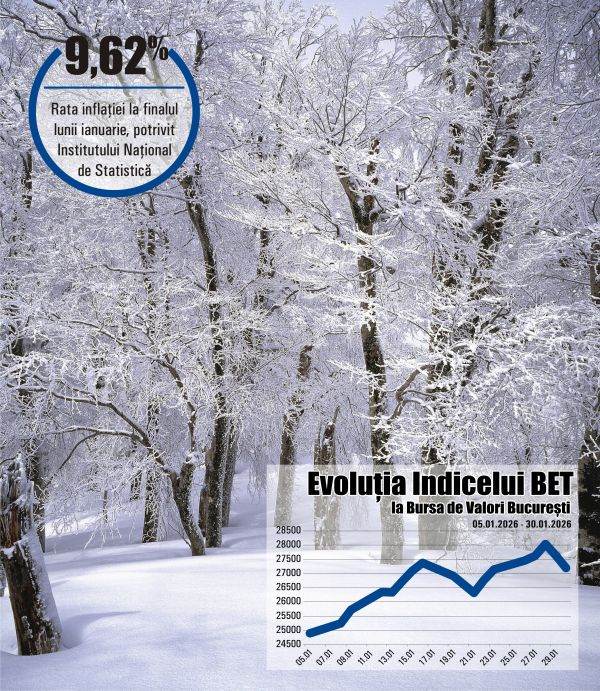
The new year started under the pressure of the fiscal measures taken by the Bologna government in 2025 and according to which, from January 1, 2026, local taxes and duties increased. According to the property and vehicle tax reform, these taxes increased everywhere in the country by 70-80%, with the mention that the amounts collected from this year remain entirely in the local budget, because the state budget can no longer support transfers in an economy suffocated by deficit. The increase in local taxes and fees has sparked new social unrest, which has resulted in protests by citizens in cities and communes across the country, dissatisfied with the fact that they have to pay almost double this year for real estate and cars they own. At the same time, in the first month of the year, the Government took measures to boost investments financed from European funds, also encouraged by the budget deficit recorded at the end of last year, of 7.65%, compared to 8.4% negotiated with the European Commission, but it also took measures to prevent fraud in allocations from the National Recovery and Resilience Plan (PNRR), through corrections, recoveries and short reporting deadlines to DLAF, OLAF and the European Public Prosecutor's Office. However, in the background, the macroeconomic picture remained tense: huge public investments, increasingly financed by grants and PNRR, but a still large deficit, high interest rates, still painful inflation in bills and services, of 9.62% at the end of January, prudence on the part of the National Bank of Romania and an open competition of the state for the savings of the population through the Treasury and Fidelis, a sign that the need for financing still remains quite high. We mention that, following the first Fidelis edition of this year, the state budget acquired revenues of 1.87 billion lei in January.
The main good news of January was the approval by the European Commission of the projects proposed by the Government for financing through the SAFE mechanism, from which our country has been allocated the amount of 16.68 billion euros. These are not grants, but loans with the guarantee of the European Commission, which benefit from an AAA rating. The loans are for 45 years, with a grace period of 10 years, but the amount must be spent quickly, by the end of 2030, given that the rules governing the projects are strict regarding joint procurement, transparency, speed of contracting and localization.
• The Government explained the new local taxation system
On January 11, the Government came forward with information on the property tax reform and the new local taxes. According to the data presented, until that moment, our country collected only 0.55% of GDP from property taxes, compared to 1.85%, the EU average, there were large disparities between localities, and for individuals the tax did not take into account the market value; over a third of the amounts were not collected, and the failure to update with inflation further eroded revenues. Therefore, in 2026, the application of the new amounts brings an estimated increase in property tax revenues of approximately 3.7 billion lei, i.e. over 30% compared to 2025, broken down as follows: an increase of 1.42 billion lei for buildings, an increase of 1.09 billion lei for land and an addition of 1.18 billion lei for cars, motorcycles or motor vehicles, with the mention that all this money remains in local budgets.
According to the reform in the field of local taxes and fees, the tax on buildings and land is built as an accelerated transition to taxation at market value, announced as a target for January 1, 2027. Until then, the tax base was recalibrated, by eliminating outdated historical values, and increased by approximately 70%, with a uniform technical reference: 2,677 lei/sqm, taxable value (approximately 535 euros/sqm), described as a realistic national average construction cost for a home with standard finishes, without land, VAT or developer's margin. Unfortunately, the increase estimated by the Government at 70%-80% represents only an average, in practice there are occasional cases where the increase in taxes and fees has far exceeded this level, due to the disappearance of the reduction coefficients that thinned the tax base for old buildings and the disappearance of the additional reduction for apartment buildings. Moreover, according to the legislation in force, there is the possibility for a local council to increase local taxes and fees up to 100% (compared to 50% previously), based on economic, social, urbanistic criteria.
• The ceiling of the "Medium Term Notes" Program, increased to 99 billion euros
Beyond taxation, the rest of January shows a Government that divides its agenda between punctual social measures, forced digitalization, investments, stricter rules and external repositioning.
On January 14, because the National Palliative Care Program was not implemented, the Executive decided on a 12-month transitional period, so that patients would not be blocked, allowing palliative care at home, in outpatient and/or day hospitalization, through the basic package. In the same meeting, the daily food allowance for vulnerable categories in social services increased from 22 lei to 32 lei per day, an increase that, in real terms, recognizes the inflationary pressure and the operating costs of the social system.
In parallel, the Government established prioritization criteria for transfers from the "Anghel Saligny" National Investment Program in 2026, relying on the 20% co-financing assumed by the beneficiaries and on the acceleration of advanced projects, and approved the indicators for the connectivity road between A8 and DN28, the Podu Iloaiei bypass option, connectivity financed with 141.2 million lei, with VAT, through the 2021-2027 Transport Program and the state budget.
In the meeting of January 30, the Government decided to increase Romania's capital at the Black Sea Trade and Development Bank by 100,256 shares, for a total value of 115,294,400 euros, with the payment of the paid-up capital (34,588,320 euros) in 8 installments, starting with 2027, in order to maintain voting power.
The Executive also adopted the transposition of the DAC directive into the Fiscal Procedure Code for automatic exchange of information and the implementation of GloBE reporting for groups with consolidated income of at least 750,000,000 euros and clarified the 50% reduction in property tax for residents of the Danube Delta and Apuseni Mountains Biosphere Reserve (for the home, the related land and a single means of transport), with regularization mechanisms for those who had already paid.
In the same meeting, the members of the Bolojan Cabinet came to the support of individuals with commercial activities and established a transition period for RO e-Factura until June 1, 2026, for those identified for tax purposes by CNP, plus the debureaucratization of the registration of secondary offices and rules for designating a "main" secondary office for tax payment. Also on January 30, the Government ordered new measures against PNRR fraud, establishing percentage reductions and financial corrections proportional to the severity of the violations, including for private beneficiaries without the obligation of public procurement, corrections of 5,000-15,000 lei, recovery of amounts and obligations of immediate reporting to DLAF, OLAF, the European Prosecutor's Office and a 10-day deadline for updating management and control procedures.
Another measure approved in that meeting was the introduction, in the field of urban planning, of requests and opinions communicated electronically, with a certain date, the elimination of unjustified fees for public works opinions, as well as rules against arbitrary refusals and numerical limitations, including on digital platforms, in an attempt to reduce administrative blockages that suffocate investments.
And, because the need to finance the deficit is increased for the state budget, the Government increased the ceiling of the "Medium Term Notes" Program from 90 to 99 billion euros, explaining the need for flexibility and constant presence on foreign markets.
• The state borrows from the population
The financial balance was fragile in the first month of the year and strained by the ambition of public investments, inflationary pressure and the prudence of monetary policy, and the signals transmitted by the Ministry of Finance, the National Institute of Statistics and the National Bank of Romania outlined the image of an economy that is moving forward, but with the handbrake partially pulled.
The Ministry of Finance has drawn attention to the need for financing this year, since January 9, when it published the list of significant public investment projects, prioritized for the current year, a list that includes 195 projects, valued at 457.7 billion lei, focused on road, railway, health, urban transport and water management infrastructure. The A7, A1 Sibiu-Piteşti and A8 motorways, the Caransebeş-Timişoara-Arad and Braşov-Sighişoara railway modernizations, regional emergency hospitals, the extension of Metro Line 6 to Henri Coandă International Airport and coastal protection works are presented as engines of development, and the message sent by the Ministry of Finance is clear: investments must become the main vector of economic growth and structural modernization. The same logic of resource mobilization is found in the Ministry of Finance's offensive on the government securities market for the population. This year's first edition of the Tezaur program was launched on January 12, with non-taxable annual interest rates of up to 7.40% for maturities of 1, 3 and 5 years, in a context in which bank yields remain under pressure and classic savings are losing ground to inflation. Just two days away, the first edition of the Fidelis program in 2026 raised the stakes: interest rates of up to 7.50% in lei and 6.20% in euros, accessible to both resident and non-resident investors, through partner banks and listed on the Bucharest Stock Exchange. The subscriptions of over 1.87 billion lei to the first edition of Fidelis this year confirm the population's appetite for instruments considered safe, but also reveal a less comfortable reality: the state is aggressively competing for citizens' savings, in a period in which financing costs remain high, and the need for budgetary resources is constant.
In this context, on January 15, Alexandru Nazare, Minister of Finance, signed the second financing contract with the European Investment Bank, worth 500 million euros, for the A1 Sibiu-Piteşti Motorway, the first highway crossing the Carpathian Mountains. The loan is part of a total package of 1 billion euros, the value of the project being estimated at approximately 5.5 billion euros, with completion expected for the fourth quarter of 2028.
On January 27, the Ministry of Finance presented the execution of the general consolidated budget for 2025, which shows a cash deficit of 146.03 billion lei, equivalent to 7.65% of GDP, down from 8.67% in 2024, total revenues of 662.7 billion lei (+15.3%) and expenditures of 808.73 billion lei. The absolute record is reached for investments: 138.2 billion lei, up 15.7%, over half financed from non-reimbursable external funds and from the PNRR.
• BNR maintains the reference interest rate
Despite the above data, the inflation rate for January, published by the National Institute of Statistics, shows that there is still much work to be done for fiscal and economic consolidation. The annual inflation rate of 9.62% in January 2026, almost identical to that in December 2025, indicates a slow disinflation, insufficient to quickly restore purchasing power. Electricity records spectacular annual price increases of over 59%, services increase by over 11%, and food continues to put pressure on household budgets. Inflation is no longer just a macroeconomic indicator, but an everyday experience, felt in bills, in the daily basket and in transportation costs.
In this context, the decisions of the National Bank of Romania of January 19, 2026 convey the message of strategic prudence: the monetary policy interest rate was maintained at 6.50%, the Lombard facility at 7.50%, the deposit interest rate at 5.50% and the minimum reserve requirement, unchanged. The NBR acknowledges the slight decrease in inflation towards the end of 2025, but draws attention to the persistence of adjusted CORE2 core inflation, fueled by wage costs, inflationary expectations and the indirect effects of higher energy prices. The real economy shows mixed signs: quarterly GDP compression in Q3 2025, probable stagnation in Q4, declines in retail and industry, but solid dynamics in construction and investment. Private credit is slowing, the leu/euro exchange rate remains volatile, and external uncertainties - geopolitical, commercial, monetary - weigh on the outlook.
The year 2026 thus begins under the sign of a complex equation. The state invests, borrows, attracts European funds and offers the population attractive non-taxable interest rates, while the central bank keeps interest rates high to anchor inflation, and consumers experience persistent price increases. The essential question is no longer whether there is money or projects, but whether this simultaneous development and stabilization effort can be maintained without major fractures: without fiscal slippages, without blockages in the implementation of investments, without the accelerated deterioration of purchasing power. Romania does not lack plans and financing, but the margin for error. And in 2026, this margin seems thinner than ever.
• SAFE, the mechanism through which the national defense industry can be revived
On January 15, the European Commission approved the projects submitted by our country for financing through the SAFE mechanism - "Action for the Security of Europe" - projects that had been approved by GEO no. 62/2025. We mention that SAFE is the largest European financing mechanism dedicated to defense and dual infrastructure: a total budget of 150 billion euros, in the form of advantageous loans, in a short period, 2026-2030, with a maturity of up to 45 years and a 10-year grace period. In other words, a lot of money, cheap, long-term, but with an implementation deadline at the end of 2030 and with strict rules, which eliminate dedicated tenders. The allocation from SAFE for our country is 16.68 billion euros, and the first payments are estimated for March 2026.
On January 26, during a press conference held at the Victoria Palace, the Deputy Prime Minister and Minister of National Defense, Radu Miruţă, said how the allocated amount will be spent: 9.53 billion euros for the endowment of the Romanian Army and the associated infrastructure, 4.2 billion euros for the infrastructure dual road managed by the Ministry of Transport and Infrastructure (the ends of the Moldovan Highway Paşcani-Ungheni and Paşcani-Siret) and approximately 2.8 billion euros for the Ministry of Internal Affairs and the other forces in the national defense system, with explicit components for public order, resilience and civil protection.
In the MApN area, it is about financing 21 projects, of which 10 in joint procurements and 11 individual procurements of the Romanian state. The examples listed indicate a wide range: armored personnel carriers, logistics platforms, helicopters, radars, anti-aircraft and anti-missile systems, patrol ships, ammunition, drones, command-control and simulation/training capabilities, including loitering ammunition and VSHORAD systems. The tight calendar until the end of May 2026 for contracting "individual” procurements is also explicitly discussed, which pushes the Romanian state into a race against time.
Regarding the amount allocated to the Ministry of Internal Affairs, it will be spent, among other things, on protecting critical infrastructure, managing evacuations, population flows, communications, command and control, cyber capabilities, drones and anti-drones, mobility for logistics corridors, plus equipment and ammunition for the forces in the system. Also from SAFE, our country also has an allocation of 900 million euros for civil protection, with the money to be spent on multiple casualty transport vehicles, medical trains, multirole aircraft, helicopters, simulators, CBRN equipment, decontamination containers, robots and drones, high-power generators, mobile camps, critical communications and an integrated national warning and alarm system.
• The government strictly regulated the use of pyrotechnic articles
Last month, the executive regulated the conditions necessary for the placing on the market of pyrotechnic articles. The normative act aims to better protect the population by drastically reducing people's access to pyrotechnic articles that can cause accidents. Thus, the general public is prohibited from owning/using and/or selling stage pyrotechnic articles in category T1, as well as other pyrotechnic articles in category P1, and access to these products is established exclusively for pyrotechnicians and authorized operators.
The main changes made concern the regime of owning and using pyrotechnic articles, the extension of the scope of authorization, as well as the optimization of the legal framework regarding sanctions. Thus, pyrotechnic materials in categories T1 and P1 will be able to be owned or used only by authorized economic operators.
• Amended legislation, one year after the disappearance of the Coţofeneşti Helmet
Almost a year after the disappearance of the Coţofeneşti Helmet, following a robbery at the Drent Museum in the Netherlands, the Bologna government adopted an ordinance amending and supplementing Law 182/2000 on the protection of movable national cultural heritage.
The new regulatory act establishes the conditions for the use of movable cultural assets that are classified as functional. Based on the new law, these assets will be able to be used only in compliance with their intended purpose and specificity, as well as the conditions for conservation and enhancement.
The regulatory act approved by the Government also brings clarifications regarding civil contracts concluded for the organization of exhibitions, for restoration, expertise and investigation in specialized laboratories or for the implementation of cultural projects on the national territory or on the occasion of the export of classified movable cultural assets. Thus, the respective contracts must be adapted to the specifics of the asset, its legal regime, the operation in question and contain clear clauses regarding the obligations of the organizing legal entity, at least regarding ensuring the security and protection of the assets, civil insurance against risks and regarding the environmental and conservation conditions in which the assets are stored or exhibited.
As for movable cultural assets owned by the state or administrative-territorial units and under the administration of public institutions, they will be exported only temporarily and only for the organization of exhibitions abroad, for scientific laboratory investigations, restoration, expertise or for their use within cultural projects, according to the specifics of the movable cultural asset, provided that the assets are insured for all risks.
Also, the ordinance approved by the Executive also provides that movable cultural goods classified in the Treasury category, owned by natural or legal persons under private law, may only be exported temporarily for the organization of exhibitions abroad, for scientific laboratory investigations, restoration, expertise or for their use within cultural projects, according to the specifics of the movable cultural property, based on civil contracts with specific clauses.


















 Euro
Euro Dolar SUA
 Franc elveţian
 Liră sterlină
 Gram de aur