 English

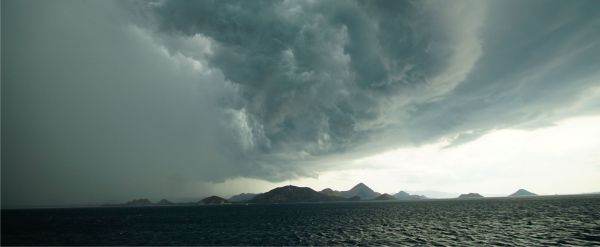
A study published in the journal Science Advances proposes a new approach to limiting the effects of the El Nino climate phenomenon: intervening in clouds before the phenomenon forms. The research, taken over by AFP, suggests that increasing the brightness of clouds over the equatorial Pacific Ocean could reduce or even prevent the development of future El Nino episodes, but the authors emphasize that the method is still in an experimental stage and raises many questions.
• A localized intervention in the climate
According to the study, researchers used climate models to analyze the effects of a geoengineering technique based on increasing the brightness of clouds by dispersing sea salt particles in the atmosphere. Unlike other geoengineering proposals, which aim to cool the entire planet, this method aims for a localized intervention in the equatorial Pacific, during the period when the El Nino phenomenon begins to form. El Nino is a natural variation in the global climate system, characterized by the warming of the waters of the central and eastern equatorial Pacific Ocean. The phenomenon influences atmospheric circulation and causes changes in the precipitation and temperature regime on a global scale, favoring drought in some regions and floods in others. Combined with global warming caused by human activities, the last El Nino episode contributed to the record temperatures recorded worldwide in recent years.
• Inspired by the fires in Australia
According to the authors, the idea for the study started from observations made after the devastating fires in Australia in the period 2019-2020. At that time, smoke particles reaching the atmosphere caused clouds to reflect more solar radiation, a phenomenon that previous research has shown favored the installation of a prolonged La Nina episode.
Starting from this "natural experiment", the researchers simulated the replacement of smoke particles with aerosols formed from sea salt, naturally present in the ocean atmosphere.
The simulations were conducted for the 1997-1998 and 2015-2016 El Nino episodes and indicated that the effects are maximum if the intervention begins in June and continues until February of the following year.
According to the study's lead author, Jessica Wan, a postdoctoral researcher at the University of Chicago, the technique could reverse much of the changes produced by El Nino on temperatures and precipitation at a continental level.
• Technical obstacles and side effects
However, the authors warn that practical application is still a long way off. According to the study's estimates, about 2,400 aircraft - the equivalent of about 2% of the world's commercial fleet - would need to be equipped with special systems to spray sea salt particles into the atmosphere. The necessary technology is still in the experimental phase and cannot yet operate at the required capacity. In addition, the simulations show that the effects would not be uniform globally. Although the intervention would reduce the impact of El Nino in many regions, it could generate warming in parts of Europe and Asia, which raises questions about the distribution of benefits and risks. The researchers also acknowledge that the study does not analyze the effects of repeating such an intervention on natural climate variability in the long term.
• Geoengineering cannot replace emissions reduction
According to Jessica Wan, the development of such technologies should not be seen as an alternative to reducing greenhouse gas emissions, but as a possible complementary measure to limit the most severe effects of climate change.
The author argues that humanity is already on a trajectory of climate warming, which requires exploring solutions capable of reducing the impact of extreme phenomena, in parallel with efforts to reduce emissions. The study, published in Science Advances, is part of a field of research that is still in its infancy, and the authors emphasize that any potential application of geoengineering techniques will require additional scientific assessments and an international consensus on the climate, economic and ethical implications.























 Euro
Euro Dolar SUA
 Franc elveţian
 Liră sterlină
 Gram de aur





























