 English

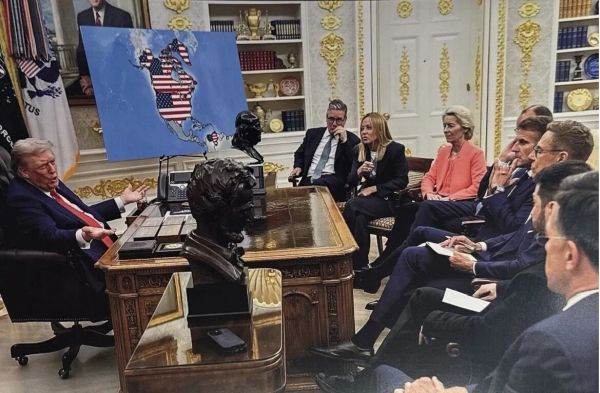
The world we live in is, paradoxically, more interconnected and vulnerable than ever, as emerges from the nine articles entitled "Contemporary Fragilities" and published on his blog by sociologist and political analyst Vasile Dâncu, a PSD MEP. The author proposes a broad interpretation of the current historical moment: we are not only witnessing a succession of geopolitical, economic and cultural crises, but also the structural transformation of the world into a fragile system, in which shocks propagate rapidly through global networks of power, infrastructure and information. According to the cited source, fragility is not an accident of the era, nor a temporary consequence of some leaders or regional conflicts, but the very systemic condition of late modernity. The globalized world has become a continuous network of interdependencies, and in such a world, every local crisis has the potential to become global. If in past centuries distance, geography and the relative autonomy of states limited the spread of conflicts and economic crises, today global infrastructures - from logistics chains and energy systems to digital and financial networks - transform any disruption into a phenomenon with cascading effects.
This idea is the leitmotif of the social-democratic MEP's writings: contemporary fragility is not a moral or political weakness, but the inevitable result of hyperconnectivity. The more integrated the world is, the more vulnerable it is to systemic disruptions. Recent crises, from regional wars to energy, financial or information shocks, are not separate events, but different manifestations of the same structural logic. In this sense, the author suggests that the current era resembles less the stable period of globalization after the Cold War and more a transition to a fluid international order, in which rules are contested, alliances renegotiated, and institutions must function in a permanently unstable environment.
• Europe, in a process of strategic fatigue
One of the strongest diagnoses in these texts concerns Europe. In Vasile Dâncu's analysis, the continent is not in a process of institutional collapse, but in a process of strategic fatigue. The European Union functions, produces regulations, maintains solid economic and institutional mechanisms, but has lost some of its political clarity and ability to project power in a world that has become geopolitical again. Europe was built for an era of cooperation and predictability, in which competition between great powers seemed to be replaced by a stable liberal order. This era has ended, however, and the continent is simultaneously confronted with strategic pressures from the East, global technological and economic competition, and internal political tensions fueled by polarization and populism. In this context, the author argues that Europe is not so much institutionally weak as it is strategically disoriented, caught between the reflexes of an old world and the demands of a new one.
For Romania, this paradigm shift has major implications, states the social-democratic MEP, who shows that, traditionally, Romanian public discourse has cultivated the idea of a protective geography: belonging to the periphery of major conflicts or to the edge of great empires was sometimes perceived as a form of security. The former Minister of National Defense, Vasile Dâncu, radically rejects this perspective and specifies that in the era of drones, long-range missiles, satellites, cyber attacks and global digital infrastructures, geography no longer offers real protection. Security is no longer determined by distance or terrain, but by the capacity of states to integrate into networks of alliances, infrastructures and collective defense systems. In this logic, isolation or strategic discretion are no longer viable options. Small or medium-sized states do not become more secure by withdrawal, but by active participation in multilateral structures and systems of rules that limit the arbitrariness of power.
• Populists, characterized by discursive violence
Another thematic core of Mr. Dâncu's writings is the analysis of contemporary populism, illustrated by the political phenomenon represented by Donald Trump. The social-democratic MEP proposes a sociological analysis of this type of leadership, different from the usual moral criticism in the media space. In his opinion, contemporary populist leaders operate through a form of "symbolic violence”, in the sense theorized by sociologist Pierre Bourdieu. This violence is not physical, but discursive and symbolic: it destabilizes institutions through spectacle, hyperbole, and permanent conflict, transforming politics into a competition for control of public attention. In a media environment dominated by social media and the rapid circulation of collective emotions, visibility becomes a fundamental political resource, and conflict becomes the main tool for mobilization.
In this sense, populism is not just an ideology, but a power technique adapted to a hyperconnected and polarized society. Leaders who use these techniques do not necessarily aim to destroy institutions, but take advantage of the weakening of public trust to dominate the political agenda. Vasile Dâncu warns that purely emotional reactions of institutions or the press can amplify this strategy, because permanent conflict is precisely the environment in which populism thrives. The effective response, in his opinion, is not moral outrage, but the strengthening of procedures, rules and institutional mechanisms that can absorb shocks without collapsing.
Contemporary fragility, however, is not only geopolitical or institutional. It is also social, economic and psychological. In his analyses of the perception of security in Romanian society, the former Minister of National Defense shows that public fear is fueled by the overlap of several types of insecurity: military, economic and informational. People perceive not only the risk of war or regional conflicts, but also their impact on daily life, from the cost of energy and food to job instability. At the same time, the digital environment amplifies collective anxiety through the rapid circulation of disinformation and alarmist narratives. In this combination of factors, fear becomes a cumulative phenomenon, and the vulnerability of society can no longer be analyzed only in military or economic terms.
• The real nodes of power
One of the most suggestive ideas that emerges from the analysis carried out by Vasile Dâncu is that the classical geography of security has been replaced by a geopolitics of infrastructures. In the past, mountains, rivers or seas were considered natural barriers against external aggression. Today, however, data centers, submarine cables, energy corridors, logistics networks, and digital systems have become the real nodes of power. Cyberattacks, energy sabotage, or disruption of logistics chains can produce economic and political effects comparable to those of a traditional military conflict. In this world, security no longer means just defending a physical border, but protecting a complex system of critical infrastructures. In conclusion, fragility should not be interpreted as a condemnation of the contemporary world, but as a structural reality that must be understood and managed. Societies that refuse to accept this reality risk reacting through panic, isolationism, or geopolitical nostalgia. Societies that understand it, however, can transform fragility into a stimulus for adaptation, cooperation, and institutional innovation. In a world without stable guarantees, political maturity means the capacity to build rules, alliances, and resilience mechanisms that reduce the inevitable impact of crises. Fragility cannot be eliminated, but it can be managed. And this is perhaps the most important lesson of the era we live in.












 Euro
Euro Dolar SUA
 Franc elveţian
 Liră sterlină
 Gram de aur





























