English

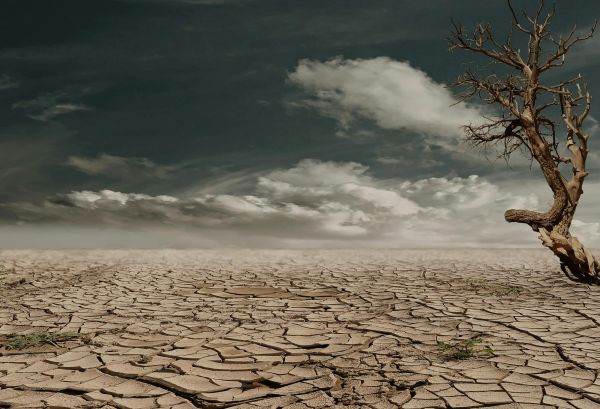
The year 2025 was the third hottest year ever recorded globally, according to data published by the European Copernicus observatory and the American Berkeley Earth Institute. Specialists warn that extremely high temperatures are not an isolated episode, and 2026 is expected to remain at historic levels, confirming a worrying acceleration of global warming, AFP reports. According to the annual Copernicus report, the global average temperature was, for the third consecutive year, above the threshold of 1.5 degrees Celsius compared to the pre-industrial period (1850-1900) - a level considered until recently as a limit that should not be exceeded to avoid the worst effects of climate change.
• Three years above 1.5 degrees Celsius
"The sharp increase between 2023 and 2025 was extreme and suggests an acceleration in the pace of global warming,” Berkeley Earth scientists separately estimated. In 2025, the global average surface temperature of land and oceans was 1.47 degrees Celsius above pre-industrial levels, after the absolute record of 1.60 degrees Celsius set in 2024. Many climate scientists, policymakers and UN representatives have publicly admitted since 2024 that the most ambitious goal of the Paris Agreement - limiting global warming to 1.5 degrees Celsius - is, in fact, impossible to achieve in the long term. After three consecutive years above this threshold, Copernicus estimates that the sustainable overshoot could be formalized "by the end of this decade, more than a decade earlier than initially anticipated.”
• 2026 will not bring a pause in global warming
The forecasts for this year are no more optimistic. Samantha Burgess, deputy director for Climate Change at Copernicus, expects "2026 to be one of the five warmest years on record,” with values comparable to those of 2025. In turn, climatologists at Berkeley Earth estimate that 2026 will most likely be the fourth warmest year on record, after 1850. In the event of the El Niño phenomenon, known for its temperature-amplifying effect, "2026 could even become a record year,” Carlo Buontempo, director of Climate Change at Copernicus, told AFP. "Whether it's 2026, 2027 or 2028, it doesn't really matter. The trajectory is very, very clear,” he stressed.
• Weak policies and rising emissions
The acceleration of global warming is all the more worrying as international efforts to reduce greenhouse gas emissions appear to be losing steam. The United States, the world's second-largest emitter, has walked away from international climate cooperation under the Trump administration, prioritizing oil and coal exploitation. At the same time, emissions reductions in several rich countries have stalled in 2025. In France and Germany, emissions reductions have "stuck in place,” while in the United States, the expansion of coal-fired power plants has led to a further increase in carbon footprints, reversing some of the progress made earlier. "The urgency of climate action has never been greater,” Mauro Facchini, head of the Copernicus Unit, told a press conference.
• Regional records and extreme events
The global average hides major regional disparities. AFP's analysis of daily Copernicus data shows record temperatures in areas such as Central Asia, Antarctica and the Sahel region. According to Berkeley Earth, about 770 million people experienced record temperatures in their countries in 2025, while globally no record cold was recorded. The year 2025 was also marked by a succession of extreme weather events: heat waves, cyclones and violent storms in Europe, Asia and North America, as well as devastating fires in Spain, Canada and California. The intensity and frequency of these phenomena are amplified by climate change, experts warn.
• Why the planet is warming faster
The growing consumption of oil, coal and fossil gases remains the main driver of global warming. Natural climate variability also plays a role, but in 2025 the cooling phenomenon La Niña was relatively weak. In addition, researchers draw attention to less obvious but important factors. Robert Rohde, chief scientist at Berkeley Earth, warns that international regulations introduced in 2020 to reduce the sulfur content of ship fuel have had a paradoxical effect. Reducing sulfur dioxide emissions has reduced the formation of aerosols that reflect sunlight, thus indirectly contributing to a further increase in temperatures. global warming. The scientists' conclusion is firm: even if the exact year of the next absolute record remains uncertain, the direction is clear. The planet continues to warm rapidly, and the window of time to limit the worst effects of climate change is narrowing dramatically.





















 Euro
Euro Dolar SUA
 Franc elveţian
 Liră sterlină
 Gram de aur