 English


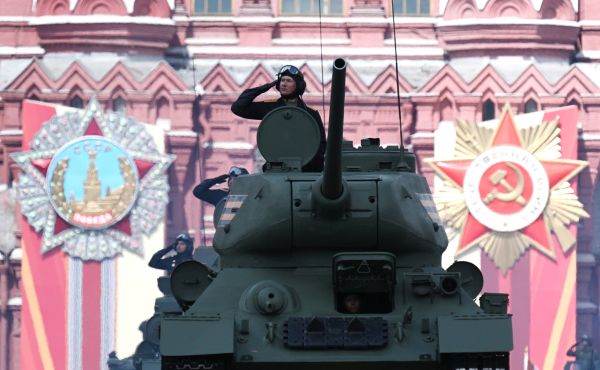
The Kremlin will be able to send its armed forces anywhere in the world to defend the rights and freedoms of Russian citizens, a bill adopted in first reading by the State Duma two days ago stipulates, according to a press release published on the institution's website in Moscow.
The vote on April 14 is not just an internal legislative episode, but a clear strategic signal, formulated right from the top of power in Moscow, where the official discourse builds a broad justification for the expansion of the Russian state's actions beyond its borders.
"The purpose of the proposed norms is to strengthen the protection of the rights of our citizens against the actions of unfriendly foreign states,” declared the speaker of the State Duma, Veaceslav Volodin, in a formulation that, beyond the defensive appearance, hides a paradigm shift: the protection of citizens becomes a sufficient argument for intervention.
The bill amends the legislation on citizenship and defense and explicitly introduces the possibility of extraterritorial use of the Russian armed forces, by direct decision of the President of the Russian Federation, to intervene in situations where Russian citizens are arrested, detained or prosecuted in other states or before international courts in which Russia does not participate. This provision is not a technical one, but redefines the way in which Moscow can exercise its power outside its borders, opening the way to interventions that can be politically justified in almost any tense context. In essence, any legal conflict involving a Russian citizen abroad can become a national security case, and the response is no longer limited to diplomacy or negotiations, but can include military force.
The discourse accompanying this initiative is as harsh as its implications. "Western justice has become, in fact, an instrument of repression against undesirables. For them, ignoring international norms and rules, brutal interference in the affairs of sovereign states, accompanied by illegal persecution of people, has become a common practice. In these conditions, it is important to do everything so that our citizens are protected," said Veaceslav Volodin, thus explaining the entire legislative process. In this logic, any action of a state considered "unfriendly" can be qualified as abuse, and Russia's reaction can easily exceed the legal framework, entering the area of direct intervention. Moreover, the draft establishes that not only the army, but also the institutions of the Russian state will be obliged to adopt "necessary measures" to protect these citizens, within the limits of their competence, which creates a complex and flexible mechanism of reaction, from diplomatic pressure to special operations. The concentration of the decision in the hands of the President of the Russian Federation amplifies the political dimension of this instrument, transforming each case into a potential strategic decision with international impact.
In an already fragile global context, marked by open conflicts and rivalries between great powers, such a law risks further straining international relations and setting dangerous precedents. The possibility that Russia could invoke the protection of its own citizens to send its troops anywhere in the world introduces a gray area between international law and military force, where the boundaries are becoming increasingly difficult to define. If this project is adopted in its current form - for its adoption there will be two more voting sessions - it will not be just a legislative amendment, but a signal that the rules of the game are changing, and the protection of citizens may become, in the hands of a global power, the ultimate justification for intervention.























 Euro
Euro Dolar SUA
 Franc elveţian
 Liră sterlină
 Gram de aur





























