English


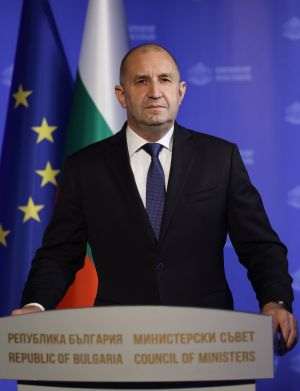
The Romanian state is willing to deliberately inflate an order of almost one billion euros, through the SAFE mechanism, so that a private investor can be convinced to swallow a 180 million euro hole at the Mangalia Shipyard, officially valued at only 87 million, according to statements made by Radu Miruţă, Minister of National Defense, in a podcast published at the end of last week on the explicativ.com website, statements that went unnoticed by the mainstream media in our country.
The Minister of Defense, Radu Miruţă, not only confirmed what the articles in the BURSA newspaper have systematically documented in recent months, but he took the logic to the end and formulated it without a veil: "I thought of giving this order (ed. - it concerns the two OPVs and two divers' stars) through SAFE, of 1 billion euros, so that this billion euros would be attractive enough for a manufacturer to come and assume the loss, possibly of 180 for the value of 87, this loss being compensated by the profit it would make through the production of these four ships in Mangalia 2 Mai". It is, perhaps, the most honest description of an industrial policy in Romania in recent years: you don't correct a disaster, you wrap it in a contract large enough to no longer seem like a disaster. The reality that BURSA exposed between February and April 2026 leaves no room for illusions. At Mangalia Shipyard, we are no longer talking about a company in difficulty, but about a full-fledged industrial collapse, which in April turned into bankruptcy: the reorganization plan rejected by Damen Shipyards Group, imminent bankruptcy, unpaid salaries for months, protests and the dismissal of over a thousand people.
The figures are as cruel as the minister's statements: an asset valued at around 85-87 million euros and debts that have risen to 162-180 million euros, constantly increasing. These data are not simple statistics, but are proof that the shipyard was no longer economically viable, being a toxic asset that the market normally avoids.
And yet, the state has not only refused to accept this verdict, but is trying to overturn it through financial engineering that defies elementary logic. Exactly what the Minister of Defense says without any hesitation: no one buys something for 87 with debts of 180, so the state artificially creates a stimulus of one billion. Not because the ships would naturally cost that much, but because the loss must be "swallowed” by the eventual buyer, which the sources we contacted call the giant Rheinmetall.
We mention that in the last three months we have described the mechanism in articles in the BURSA newspaper: since February, Minister Miruţă admitted that "just by playing with these two parameters, the shipyard will die” and that the rescue depends exclusively on military orders financed including through SAFE. In other words, there is no intention of any valid restructuring plan, there is no solid legal solution, there is no business model, but only the idea that the Army must become the customer of last resort.
Meanwhile, reality continued to deteriorate: potential investors came, analyzed, left or remained in expectation, including groups such as MSC or Rheinmetall, interested in the opportunity rather than a safe financial hole. Because the market works simply: it does not buy losses. And this is where the Romanian state's "solution” comes in, one that BURSA has repeatedly described as not a rescue, but a perpetuation of the causes that led to the disaster. Instead of correcting the political intervention of 2018 - when the Dăncilă government, at the proposal of Liviu Dragnea, refused to award the contract for the four military corvettes to the Damen company, which owned 49% of the Mangalia Shipyard -, the state is doubling down on it. Instead of letting market mechanisms clean up the situation, it is replacing them with imposed orders. Instead of reducing losses, it is redistributing them.
The statement of the Minister of National Defense is, in fact, the official recognition of this logic: the Romanian state knows that the shipyard is not worth its debts and accepts to pay the difference indirectly, through public contracts. SAFE thus becomes not a security instrument, but a mechanism to cover a financial hole. The ships are no longer the goal, but the pretext.
The ultimate irony is that all these things have already been presented in the pages of our newspaper: the decision-making deadlock, the conflict with Damen, the inability to reorganize, the political pressure for orders, the ignorance of industrial realities. Minister Radu Miruţă has only combined them into a single and devastating sentence.
In the end, it is no longer about saving a shipyard, but about testing a limit: how much the state can distort economic reality before the bill becomes impossible to hide. Because the differences rent between 87 and 180 does not disappear through a billion-dollar contract. It just moves from a company's balance sheet to the public pocket. Because the money from SAFE represents a loan taken by the Romanian state. And the billion euros allocated for the presumed buyers of the Mangalia Shipyard will have to be returned, with the associated interest, from the state budget.
And if this is the "strategy", then the Mangalia Shipyard is not saved. It is just packaged more expensively.





















 Euro
Euro Dolar SUA
 Franc elveţian
 Liră sterlină
 Gram de aur