English


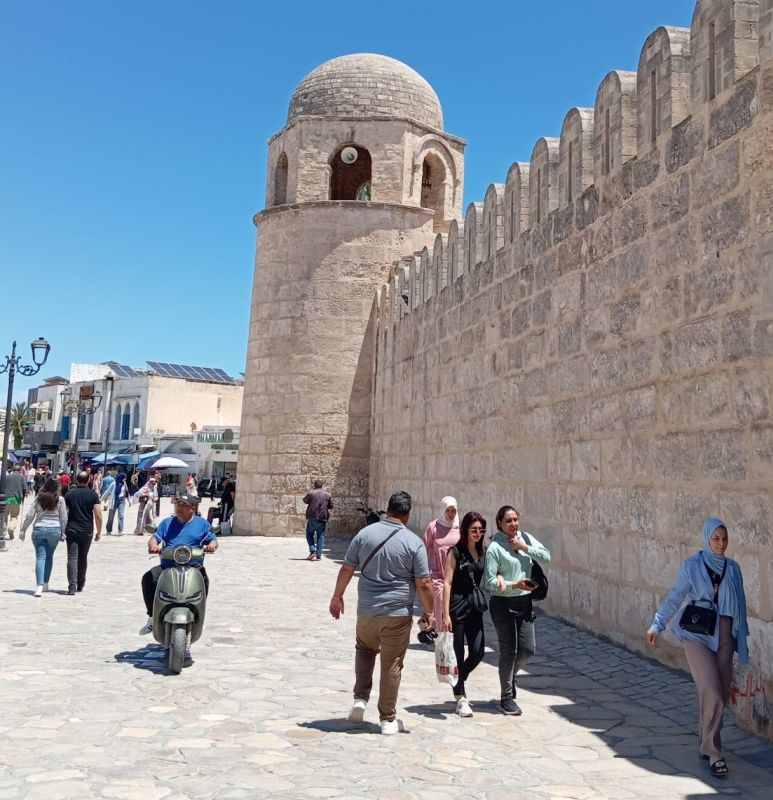
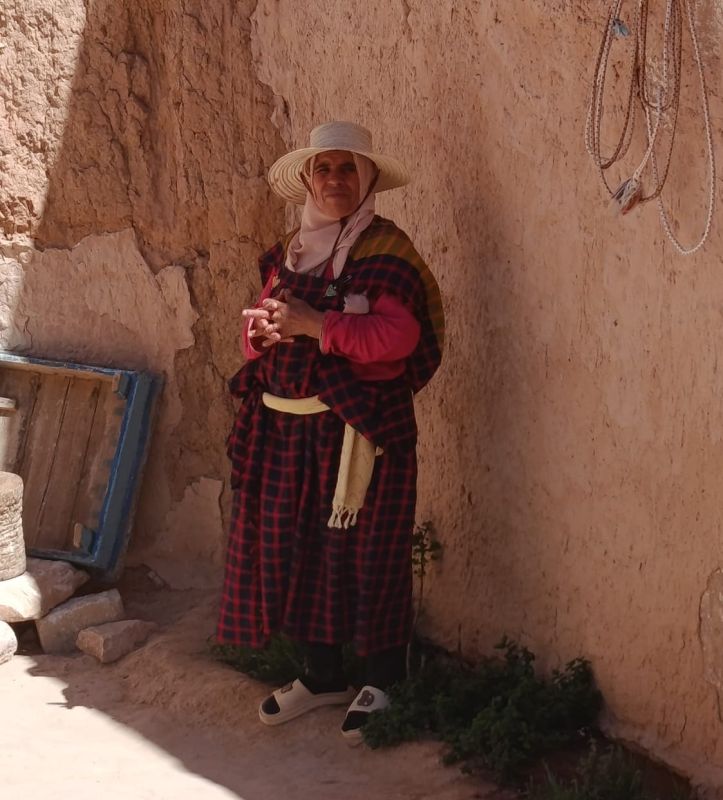
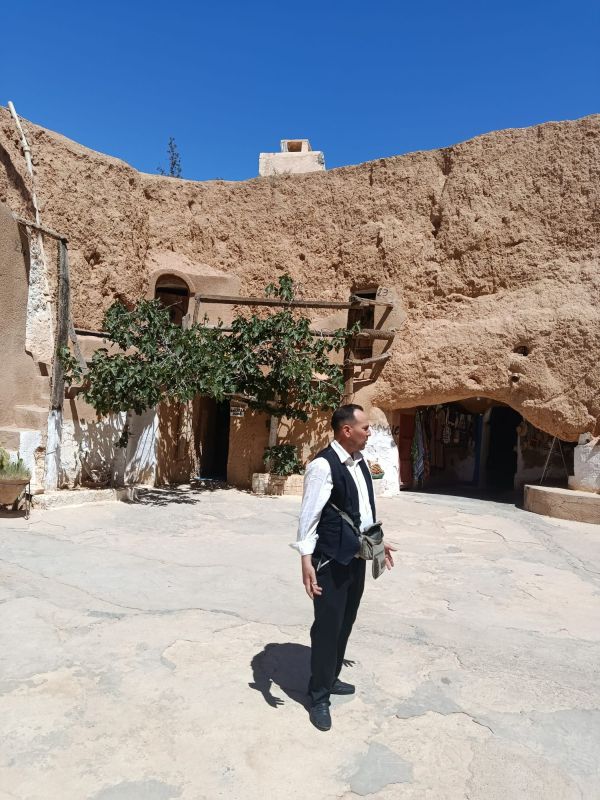
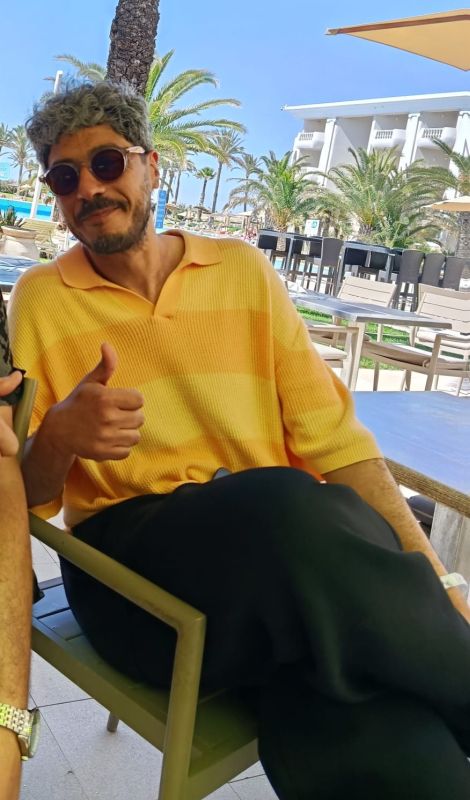

There are countries that you remember for monuments, places and there are countries that you remember for people. Tunisia falls into both categories. After a few days, you start to confuse the names of some resorts, forget the distances between cities and mix Roman ruins with the sand of the Sahara in your memory. In return, you remember the people perfectly. And of all the people you met on this trip, only one seems to represent them all.
• Ambassador Ali
Officially, he was the bus driver. In reality, he was the unofficial ambassador of Tunisia. We met him on the first day and, by the end of the trip, we had the impression that we had known him for years. He spoke with the same naturalness about music, about family, about food, about Europe and about his Tunisia. He laughed a lot and had the rare talent of turning any problem into a story. One evening he invited us to his home. Not for a tourist program. Not for a folkloric demonstration for tourists. Simply at home. In his world. In his family. It was the "Feast of Sacrifice” for Muslims. A big celebration!

They welcomed us with cold lemonade, cakes and food prepared especially for the guests. His mother welcomed us, and we, strangers who had come from thousands of kilometers away, were treated like family members. In Western Europe, such an invitation is almost an exception. In Tunisia, it seems to be a form of normality. Ali was the man who knew everyone and whom everyone knew. When the bus had a technical problem, he did not wait for a service. He spent a good part of the night repairing it together with some acquaintances. In the morning he was back behind the wheel, smiling, as if the previous night had never happened.
Another evening he got on a non-existent stage and began to sing along with a local performer. Not for the show, not for the money, but for the pleasure of the moment. A few minutes later, Romanians, Tunisians and waiters were enjoying the music together, regardless of who was from Europe and who was from Africa.
In Hammamet, he found us taxis when it seemed impossible...the price of the trip. That same evening, he took us to a bar frequented by locals, where tourists rarely arrive. There, we saw Tunisia without makeup and without tourist programs.
If every country could be saved by a single man, Ali could save Tunisia.
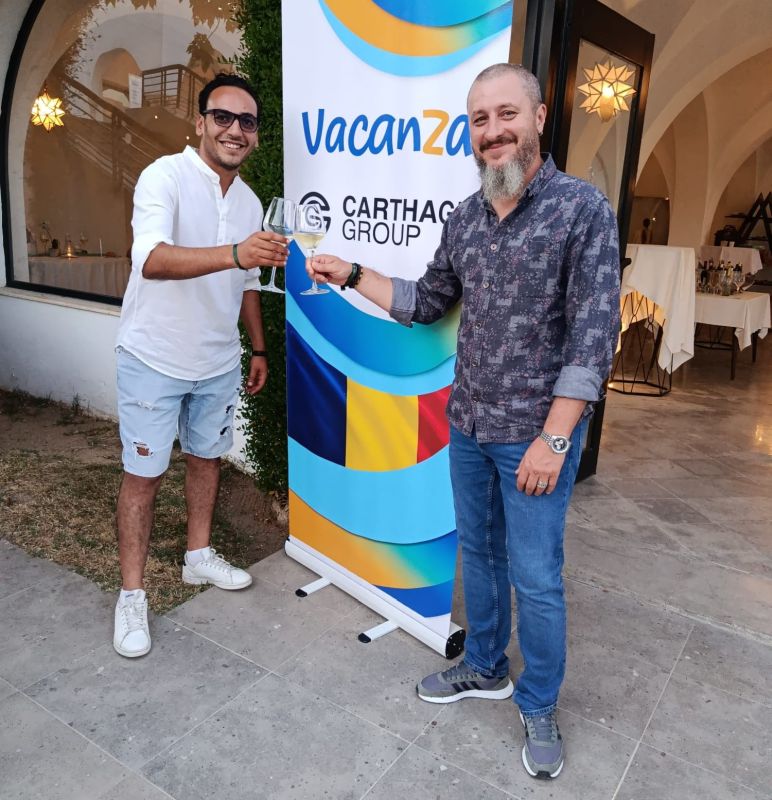
Because he had exactly what statistics cannot measure: the ability to make foreigners leave there feeling at home. Ali was assisted by Aymen, half guide - half liaison between the local agency and the one we arrived at the scene with, Vacanza. Equally kind, with the advantage of a Romanian language known from his student years. Having traveled around Europe, Aymen had also learned on our continent the taste of restraint in front of foreigners.
• Postcard
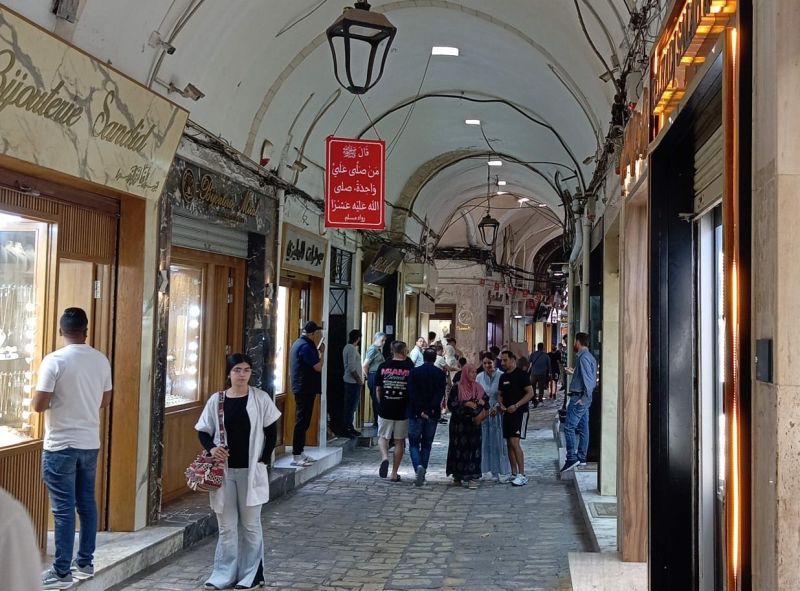
Tunisia seems, at first glance, like a postcard with warm filters: palm trees, blue pools to the edge of the horizon, hotels that change your towels twice a day and beaches where Europeans dutifully consume their annual portion of sun. But the real country begins beyond the resort fence, where the asphalt thins and the color of the sand becomes closer to that of the skin of the people who live on it. Northern Tunisia has the air of a Mediterranean promise. In the Monastir, Hammamet or Tunis area, the terraces are full, the hotels pulsate with European music and the streets seem built for the idea of a holiday. This is where prosperous Tunisia lives. Hotel owners, traders, guides, entrepreneurs and families who have benefited from the proximity of the sea and tourism. In the tourist ports you see yachts that are worth as much as a few villages in the south. Luxury SUVs appear in the hotel parking lots. The elegant shops in the north sell French perfumes, Swiss watches and Italian clothes. But Tunisia does not end there.
As you go south, the country begins to lose its luster.
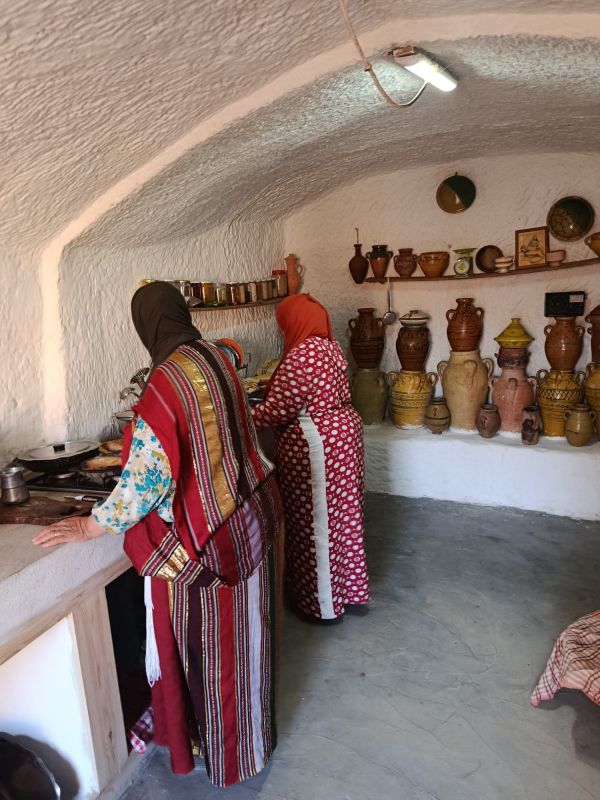
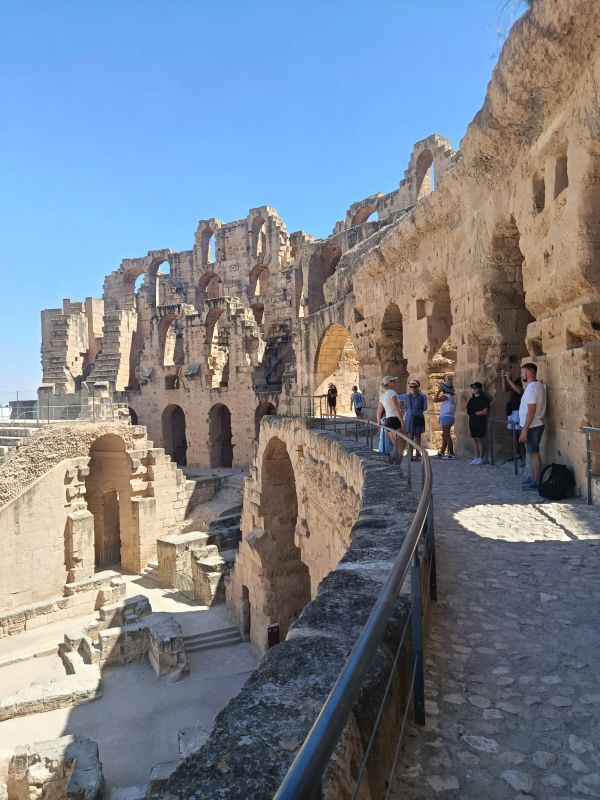
A few hours from the hotels where tourists talk about massages and buffets, there are families living in houses carved into the rock. In the troglodyte settlements, natural coolness takes the place of air conditioning, and stone walls take the place of luxury. Between the two worlds is the Colosseum of El Jem, where you feel a lot of people, even if you can no longer see them, these are the gladiators who splashed their blood on the sand of an arena that claimed to provide the circus that the bread of those days and those that followed needed.
• The Other Tunisia.
I saw old Berbers with faces carved by the sun and wind. Women carrying water. People running after buses trying to sell a bracelet, a scarf, a stone, or just to get a few dinars for a photo. A thin guy was driving a skinny camel through the sand and negotiating the price of a photo with the seriousness of a man who knows that every coin counts. In the north, the same amount would have been left as a tip without being noticed. And yet, what was important It is not poverty that presses. It is the desire to survive.
I did not meet people who complained. I did not meet resentment towards the richest. Only people who were trying to live off what the desert offered them.
There is something almost absurd in this contrast: the glossy luxury of the coast and the mineral poverty of the south coexist in the same country without ever looking each other in the eye. Two Tunisias separated not only by kilometers, but by destiny.
• Beer
However, among all the differences, there were also identical things. Tunisian beer, for example, "Celtia".
The same cold bottle. The same label. The same bitter and pleasant taste. I drank it in elegant hotels, in restaurants for tourists, in roadside cafes and in a small place built in a former troglodyte dwelling, somewhere on the edge of the desert. There I also found the lowest price. Perhaps this says more about Tunisia than all the economic statistics. In a country torn between the Mediterranean and the Sahara, between prosperity and survival, between endless swimming pools and endless sand, people remain the only common denominator. And when I think of Tunisia, I also think of the hotels, the dunes, the monuments, but especially Ali, the driver who managed to represent his own country better than any tourist brochure. Sometimes, an entire country can fit into one man.









 Euro
Euro Dolar SUA
 Franc elveţian
 Liră sterlină
 Gram de aur