 English


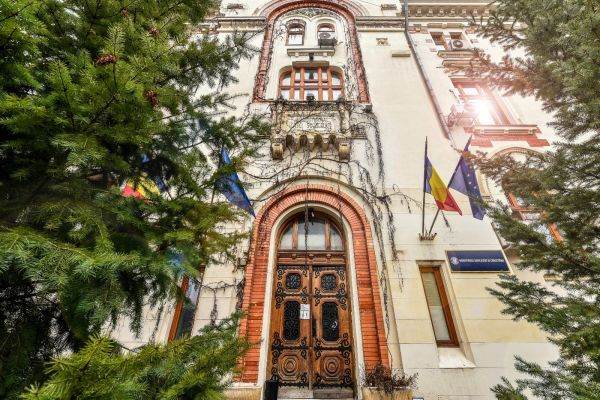
Minister of Education, Mihai Damian, declared during a press conference held in Iaşi that the institution he leads has managed to absorb almost half of the funds allocated to education through the National Recovery and Resilience Plan (PNRR) for the period 2021-2025, emphasizing that the main objective for the coming months is to accelerate the implementation of the remaining projects. On a working visit to the municipality and county of Iaşi, the minister stated that the authorities are trying to intensify the pace of investment in order to maximize the degree of absorption before the deadline imposed by the European Commission expires.
• Approximately half of the funds have already been used
According to the minister, the current absorption rate indicates that almost 50% of the European funds allocated to education through the PNRR have already been used, but the remaining amounts must be contracted and spent in a very short period of time. "In almost five years of implementation, 2021-2025, approximately half of the funds allocated to Education through the PNRR have been absorbed. We still have a few months to absorb as much of the other half as possible. It is a very big challenge," said Mihai Damian. The statement comes in the context in which all projects financed through the PNRR must be completed by August 31, 2026, a deadline that puts additional pressure on public institutions and beneficiaries.
• Reimbursement deadlines have been significantly reduced
The Minister of Education emphasized that one of the measures taken to support the implementation of projects was to reduce the time needed to reimburse expenses to beneficiaries. According to him, if at the end of last year the reimbursements were made within a period of almost 90 days, now the duration has been reduced to less than 45 days, and in some cases even to approximately 30 days. "This message is important to reach those who implement projects, from direct beneficiaries to builders or suppliers of equipment and furniture. They must have confidence that they will continue to receive the money on time," the minister said. The official believes that reducing the reimbursement terms is essential to maintain the pace of investments and to avoid financial blockages in the implementation chain.
• Call to builders and suppliers to accelerate the works
Mihai Damian also sent a direct appeal to the companies involved in the implementation of educational projects financed through the PNRR, requesting the acceleration of the works and compliance with the assumed deadlines. "They also need to emphasize the delivery processes, the constructions they have to do. An additional effort is needed in the coming period," the minister said.
In many cases, education projects include the modernization of educational institutions, the digitalization of school infrastructure, the provision of laboratories, the acquisition of furniture and IT equipment, as well as the construction or rehabilitation of campuses and student dormitories.
• The Ministry introduces a "color code” for risk monitoring
For better implementation management, the Ministry of Education collaborated with the Ministry of Investments and European Projects to develop an internal monitoring system based on a "color code”, designed to more clearly highlight projects in difficulty or at risk. "Together with the Ministry of Investments and European Projects, a color code was established to better highlight areas of risk and optimize project development,” explained Mihai Damian. This mechanism should allow for faster interventions in the case of delayed projects or projects with implementation problems.
Romania is in a race against time to complete all the investments undertaken through the PNRR, and the education sector is one of the key areas targeted by the reforms and investments financed by this program. With the deadline set for August 31, 2026, the authorities must significantly accelerate the pace of works and procurement to avoid losing unused European funds. The success of the PNRR implementation in education is considered essential for the modernization of school and university infrastructure in Romania, as well as for reducing the gaps between the Romanian education system and European standards.




















 Euro
Euro Dolar SUA
 Franc elveţian
 Liră sterlină
 Gram de aur





























