 English

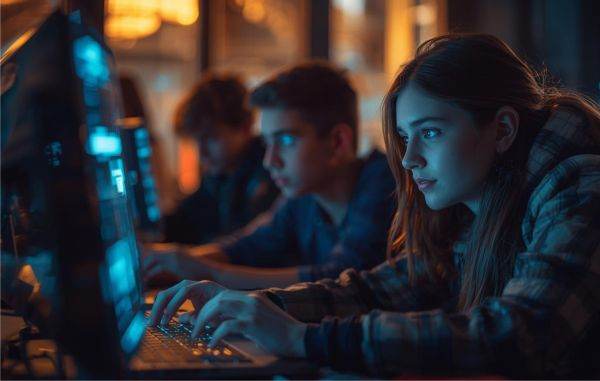
The vast majority of Romanian teenagers are already using artificial intelligence, yet schools remain far behind this reality, according to a survey published by World Vision Romania on the occasion of Safer Internet Day. The data show intensive use of AI in young people's school and personal lives, combined with a high level of exposure to false content and a lack of systematic education on the safe use of digital technologies.
According to the survey conducted among 604 students, mostly high schoolers, 99% of teenagers use applications or platforms based on artificial intelligence at least occasionally, while more than 22% use them daily. More than three quarters of respondents say they are fairly or very familiar with AI. The use of these technologies is not limited to entertainment: 62.42% of students use AI for homework or school projects, even though more than half say that teachers rarely or never discuss artificial intelligence during classes.
• Schools Lag Behind Digital Reality
One of the central conclusions of the research is the clear gap between the level of AI use among students and the preparation offered by the education system. 54.64% of teenagers say that teachers rarely or never talk about AI at school, and the lack of clear rules pushes young people to learn on their own, from unverified sources. In this context, 37.25% of respondents say they learned about the safe use of AI exclusively from online sources and social media, while 24% state that they have received no information at all on this topic. Specialists warn that this situation shifts the responsibility for digital safety almost entirely onto children.
• AI Used Without Full Understanding
Although AI is frequently used as an educational tool, it does not always lead to genuine learning. 82.11% of teenagers admit that they have used AI for homework without fully understanding the answers they received, a warning sign regarding the risk of superficial learning. The risks generated by artificial intelligence are already being felt directly by young people. Over 80% of respondents say they have encountered false content created with the help of AI online, whether texts, images, or videos. However, only 21% always verify the information provided by AI, while almost 12% never verify it. Paradoxically, more than 80% of teenagers believe they can recognize artificially generated content-a confidence that is not always supported by verification behavior.
In the school environment, nearly one third of students say they have heard about situations in which false content circulated about classmates, while a smaller percentage say such incidents happened to them directly.
The survey also highlights vulnerabilities related to personal data protection. Almost half of teenagers admit that they enter sensitive information into AI applications at least occasionally, and nearly 30% are not fully aware that this data can be stored and analyzed. At the same time, for some young people, AI becomes a source of emotional support. Almost 40% say they sometimes or often turn to AI applications for advice related to emotions, stress, or personal problems, while a worrying percentage say they talk to no one when facing difficulties.
• Teenagers Call for Clear Rules
Asked about the role of AI in schools, nearly 57% of respondents believe its use should be allowed but regulated by clear rules, while only 5% would support a complete ban. "Children and teenagers already use artificial intelligence on a daily basis, but their protection cannot be left on their shoulders alone,” warns Mihaela Nabăr, Executive Director of World Vision Romania. The organization is calling for a national strategy that includes media education, teacher training, support for parents, and sanctions for platforms that do not comply with existing legislation.






















 Euro
Euro Dolar SUA
 Franc elveţian
 Liră sterlină
 Gram de aur





























