English

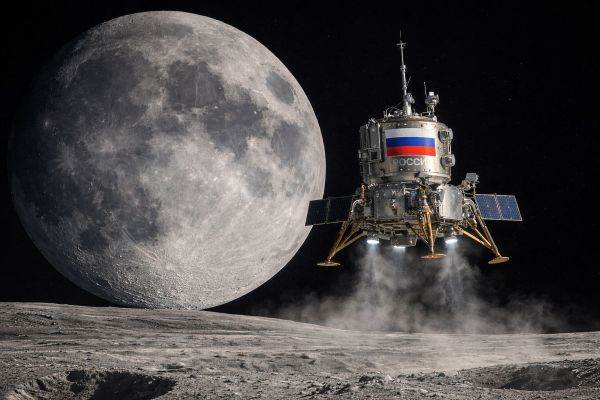
Russia's space program is suffering another major delay: the launches of three lunar missions have been pushed back by years, at a time when its traditional rival, the United States, is making a spectacular comeback in lunar exploration.
According to the Interfax agency, cited by Reuters, Russia has decided to postpone the launches of the Luna-28, Luna-29 and Luna-30 missions to 2032-2036. The announcement was made by Sergei Chernyshev, vice president of the Russian Academy of Sciences.
The new deadlines are not accompanied by detailed official explanations, but come against the backdrop of repeated delays recorded in recent years in the Russian space program.
• Luna-25 failure and ripple effects
The current delays are closely linked to the failure of the Luna-25 mission, which crashed on the lunar surface in 2023. The incident represented a major setback for Roscosmos, the institution responsible for the Russian space program. Since then, Russian officials have insisted that lunar exploration remains a strategic priority, including in the context of interest in lunar natural resources.
• A relaunched space race
In parallel, the United States is marking significant progress. NASA's Artemis 2 mission took four astronauts around the Moon, the first such human-powered flight in more than 50 years. The crew achieved a record distance, surpassing any previous human flight into deep space, a moment considered historic for humanity's return to lunar exploration.
• From Soviet supremacy to global competition
In the 1960s, the Soviet Union dominated the early space race, succeeding in: launching the first artificial satellite, sending the first man into space. Today, however, Russia faces major difficulties, lagging behind not only the United States, but also China, which is rapidly developing its own lunar program.
The postponement of the Moon missions raises questions about Russia's ability to remain competitive in a new era of space exploration, dominated by massive investments and international collaborations. While the US reaffirms its position at the forefront of lunar exploration, Russia seems trapped in a cycle of delays and technical failures. The gap between the two space powers risks widening, in a race that is gaining more and more strategic and economic importance.


























 Euro
Euro Dolar SUA
 Franc elveţian
 Liră sterlină
 Gram de aur