 English


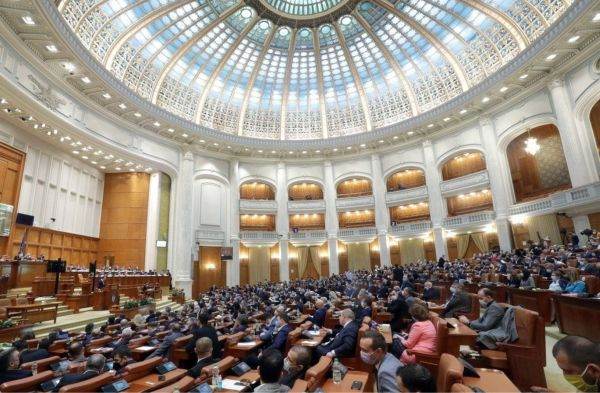
The state of the nation, after the first ten months of the Bolojan government, which was dismissed yesterday by Parliament following the approval of the censure motion, is the image of a Romania forced to pay the bill for years of delays, imbalances and unfunded budget promises. We are talking about the promises made by the Ciucă and Ciolacu governments, with an emphasis on the latter, when budget spending exploded, with 64 billion lei being cut from the Government Reserve Fund alone, and the budget deficit skyrocketing, reaching 8.65% of the Gross Domestic Product at the end of 2024. Moreover, the Bolojan government, installed on June 23, 2025, took over an economy that could no longer be managed through improvisations and which already had, in the first semester of last year, a budget deficit of 3.65% of GDP, i.e. a debt of 69.8 billion lei left by the Executive led by Marcel Ciolacu. Under these conditions, recovery was difficult to achieve last year, which is why economic growth was only 0.7% in 2025, according to the National Institute of Statistics, which shows an economy that is almost stuck, with investment and consumption under pressure, and the budget deficit closed the year at 7.65% of GDP, a level that confirmed that Romania remains in the critical area of the excessive deficit procedure. In the first three months of 2026, the Ministry of Finance reported a deficit of 21.09 billion lei, or 1.03% of GDP, a substantial decrease compared to 2.23%, as it was at the end of the first quarter of 2025, but still relevant for the size of the pressure on public finances.
We mention, before continuing the presentation of this state of the nation under the Bolojan government, that the governments in our country do not have this culture of presenting an annual balance sheet in Parliament regarding the macroeconomics and Romanian society as a whole. There is no White Paper published on Google of any post-December government. Not even the presidents of Romania since 1990 have had the habit of presenting a balance sheet of each year of mandate, to show whether the nation, as a whole, has prospered or regressed during that period. Unfortunately, neither Prime Minister Ilie Bolojan presented yesterday, in Parliament, a current state of the nation, which we present in this article, through the lens of official data from public institutions in our country.
In light of the above, the Bolojan government began, practically, with a fiscal-budgetary austerity package presented as exceptional and necessary for the "sustainable correction of the excessive deficit”, "adjustment of expenditures” and "increase in the level of budgetary revenues”. The measures aimed at increasing the standard VAT rate to 21%, introducing a reduced rate of 11%, increasing the dividend tax to 16%, increasing the specific turnover tax for credit institutions to 4%, changes to the CASS, including for pension income, increasing some excise taxes, changing the rates of rovinieta, capping some incentives for staff involved in European funds and limiting budget spending. The state thus sent a harsh message: there is no longer any money to simultaneously finance permanent expenses, large deficits and social promises without revenue increases or cost cuts.
The social cost of the correction was quickly seen in prices and purchasing power. The NBR recorded the acceleration of inflation from 5.66% in June 2025 to 9.88% in September 2025, explained by supply shocks and the impact of fiscal changes, and the INS reported an annual inflation of 9.9% for March 2026, with a price increase of 2.3% compared to December 2025. In December 2025, the average net salary had reached 5,914 lei, but in January 2026 it had dropped to 5,518 lei, according to the INS, which shows that, beyond the statistical average, the population entered 2026 with real pressure on income, rates, utilities, food and services. And to these is added the layoff of 54,000 employees from the private sector, following the closure of some companies or the reorganization of their activity. We also mention that the euro reached an exchange rate of 5.23 lei on May 5, 2026, a rate maintained by throwing 2.2 billion euros into the market by the National Bank of Romania. Unlike the above, the exchange rate went crazy when the PSD chose to associate with AUR for the motion of censure introduced against the Bolojan government.
Romania under the Bolojan government is not a country in collapse, but one in which wage increases no longer manage to fully cover price increases, and the middle class feels that it works harder to stay in place.
For entrepreneurs, the period June 23, 2025-May 5, 2026 was one of fiscal pressure, uncertainty and forced adaptation. The VAT increase, the taxation of dividends, the increase in excise duties and the changes regarding contributions directly hit margins, liquidity and investment plans. According to ONRC, 7,553 companies and PFAs entered insolvency in 2025, 3.84% more than in 2024, and in the first two months of 2026, the number of insolvencies reached 1,091, 13.17% more than the similar period in 2025. In parallel, data published based on ONRC statistics indicate 83,232 companies deregistered in 2025 and 19,586 suspensions of activity, which confirms a private economy in which many small companies have chosen either to withdraw or freeze their activity.
The balance sheet of the Bolojan government, which was dismissed yesterday by Parliament following the vote of censure, is thus an uncomfortable one: the state began the correction, but the population and companies felt it before the administration reform produced visible effects. And it is not known whether it will produce them again after yesterday's vote in Parliament.
The deficit entered a moderating trajectory in the first months of 2026, but the economy remains fragile, inflation is high, consumption is cautious, entrepreneurs accuse high taxation and suffocating bureaucracy, and purchasing power remains the main social wound.
The state of the nation is not that of a collapsed country, but of a country forced to suddenly wake up from the illusion that it can consume, borrow and postpone indefinitely. The Bolojan government has opened the bill; the decisive question is whether the future government will manage to transform austerity into real reform or whether the standard of living of citizens will remain as low just to keep the state afloat.



















 Euro
Euro Dolar SUA
 Franc elveţian
 Liră sterlină
 Gram de aur





























