 English


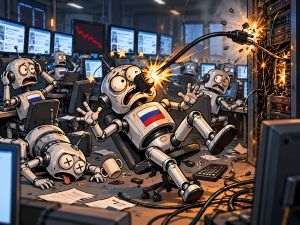
Our country is at an inflection point where the fragile economy and social tensions meet with a political crisis that could redefine the direction of the country. After months of austerity, high inflation and pressure on the private sector and the population, the future depends decisively on the evolution of the political scene. Three directions are possible at this moment, after the approval yesterday by Parliament of the motion of censure against the Bologna government: extending the blockade, rebuilding the governing coalition or a new governing coalition or early elections, each with profound consequences on the budget, businesses and living standards.
In the scenario in which the political crisis is prolonged, the economy will enter a phase of slow wear, in which the indicators do not necessarily suddenly explode negatively, but constantly degrade against the background of a lack of direction. The budget deficit will become increasingly difficult to finance on favorable terms, as investors will perceive Romania as an economy with high political risk and uncertain reforms. The state's borrowing costs will increase, which will put additional pressure on the budget, forcing further adjustments or ad-hoc spending cuts. Economic growth, already fragile, will remain in the negative territory recorded in the last two quarters of last year, especially if public investment slows down due to administrative blockages. Inflation will remain relatively high for longer, fueled by lack of confidence and possible exchange rate pressures. For entrepreneurs, the central problem will be the same - unpredictability: not so much the level of taxes themselves, but the lack of a clear perspective on them, which will lead to blocking investments, reducing expansion plans and increasing defensive behavior. Small and medium-sized companies will be the most exposed, and the number of insolvencies and suspensions of activity will continue to increase, amid falling consumption and high costs. Citizens will experience a continuous erosion of living standards: real wages will increase little or not at all - even if from July 1, 2024 the nominal gross wage will register, according to the legislation in force, a small increase -, rates will remain high, and uncertainty will influence consumption decisions, pushing the population towards forced saving. On the social level, we will see the accumulation of diffuse tensions, not necessarily explosive, but persistent, fueled by the feeling that no one controls the economic direction.
In the scenario of the restoration of the governing coalition or the formation of a coalition, the economy could enter a phase of relative stabilization, in which the adjustments that have already begun will gain coherence and predictability. The budget deficit could continue to gradually reduce, not through additional brutal measures, but by combining fiscal discipline with a slight return of budget revenues against the backdrop of a more stable economy. The state's financing costs would start to moderate, and the exchange rate would remain better anchored, which would also help reduce inflation over time. Economic growth could return slowly, mainly through resumed public investment and a timid relaunch of private investment, once the environment becomes more predictable. For entrepreneurs, the most important gain would be the stability of the rules: even if taxation remains high, the fact that it does not change frequently would allow for medium-term planning. Some sectors would start to recover, especially those related to public investment or European funds, and the pace of insolvencies could stabilize. However, the private sector would remain cautious, without real enthusiasm, because the accumulated tax burden does not disappear. For citizens, this scenario would mean a slow but visible improvement: inflation would start to decline, and wages could gradually recover from the loss of purchasing power. Living standards would not quickly return to their previous comfort, but a sense of stability and predictability would emerge, which would reduce economic anxiety and temper social tensions. It should be noted that all of the above will depend very much on whether the future governing coalition will continue fiscal consolidation and the reforms initiated by the Bolojan government.
In the scenario of early parliamentary elections, the economy would initially go through a period of heightened volatility, followed, depending on the outcome, by either a positive reset or continued instability. In the short term, the deficit would be harder to control, as major political decisions would be postponed and spending could increase opportunistically during the election period. Financial markets would react by increasing financing costs and possibly putting pressure on the exchange rate. Economic growth would slow further, and investment would be both public and private investments will be put on hold. For entrepreneurs, this phase would be a deadlock: investment decisions would be postponed, and strategies would be adjusted for survival, not for development. However, if the elections were to generate a clear majority and a government with a strong mandate, the second stage could attract a more determined relaunch of reforms, including in administration and taxation. In this case, the business environment would benefit from a clearer direction and a greater capacity to implement economic policies. For citizens, the electoral period will mean a combination of uncertainty and expectations, possibly fueled by promises, but also by fears regarding new adjustments. After the elections, the effects will depend on the credibility of the new government: either an increase in trust and an easier acceptance of difficult measures, or a deepening of distrust if the result is fragmented. Essentially, early elections offer the chance for a change of direction, but at the cost of an additional period of instability at a time when the economy and society are already tense.














 Euro
Euro Dolar SUA
 Franc elveţian
 Liră sterlină
 Gram de aur





























