English

The political crisis triggered at the beginning of May following the adoption by Parliament of the motion of censure against the Bolojan government, worsened during the first month of summer. Practically, June transformed the governmental instability into a depressing normality: two designated prime ministers, Eugen Tomac and Adrian Veştea, two consecutive failures of inauguration (Tomac submitted his mandate received, and Veştea was rejected by Parliament), a Parliament that went into vacation without the country having a Government with a full mandate and a president who entered, for the first time in his mandate, into a true constitutional vicious circle.
This political crisis was spiced up at the beginning of June with news that shook the banking system in our country. The Competition Council announced on June 7 that it had imposed a fine of 3.7 billion lei (approximately 710 million euros) on the ten largest banks in Romania, because they had manipulated the quotations of the ROBOR index, a decision that sparked a real legal and communication dispute between the respective institution and the banking system, with the National Bank of Romania also on its side.
A positive aspect on the financial front during June was offered by the Ministry of Finance, which published the budget execution for May, an execution that confirmed the trend of reducing the budget deficit.
All of the above developments took place against the backdrop of an increasingly insistent warning from rating agencies: without a functional parliamentary majority, the fiscal consolidation begun in 2025 risks remaining only on paper, and Romania risks losing the very credibility that it had tried, at the cost of painful measures, to restore in front of its European partners and financial markets. At the end of the month, economic confidence indicators confirmed, moreover, that the purely declarative area of the official discourse no longer reflects the real state felt by companies and the population.
At the end of June, Romania's overall picture remained one of deeply unstable equilibrium: budget execution confirms, at least at a declarative level, the fiscal consolidation direction assumed since 2025, and the Tezaur and Fidelis programs continue to bring important resources to the budget, but the power vacuum at the top of the Executive, the absence of a stable parliamentary majority and the increasingly insistent warnings of the rating agencies show how fragile this equilibrium is. Added to this is an inflation that remains the highest in the European Union, an economy that has technically entered recession, a confidence of companies and the population that has collapsed to the lowest levels since the pandemic, a national currency under constant pressure and a European calendar, that of the PNRR, which does not wait for the political crisis in Bucharest to be resolved.
We also mention that during June, national security underwent a new test, this time in the Black Sea, where a Ukrainian naval drone self-detonated in the Port of Constanta, and that the National Anticorruption Directorate hit directly at the center of gravity of the former governing coalition, through a file that directly targets the mayor of the capital, Cătălin Ciucu.
• The banking system, shaken by the sanction imposed by the Competition Council
After almost four years of investigations, on June 7, the Competition Council announced that it had imposed total fines of 3.73 billion lei on the ten credit institutions participating in the ROBOR index setting mechanism, assessing that they coordinated their behavior through exchanges of information considered confidential and strategic within the daily fixing procedure. The value of the sanctions, equivalent to approximately 710 million euros, represents the largest fine ever imposed by the Competition Council and immediately triggered a legal, economic and institutional conflict whose effects may go far beyond the banking market.
The Competition Council claims that the problem was not the existence of the fixing regulation nor the monetary policy of the NBR, but the fact that the participants would have adapted their own quotes knowing in advance strategic information regarding the intentions of the other credit institutions, thus affecting the independence of the index formation process. The authority insists that it did not sanction the existence of ROBOR nor the level of interest rates resulting from monetary policy, but exclusively the anti-competitive conduct of the participants in the fixing.
However, the banking system categorically rejected the accusations. All the sanctioned institutions announced that they would challenge the decision in court, and the common position of the industry was expressed through the Romanian Association of Banks. ARB claimed that the participating banks had always respected the legal framework and the current regulations developed under the authority of the NBR, that the ROBOR mechanism operates on the basis of clear and transparent technical rules and that the information exchanges invoked by the Competition Council represent a natural consequence of the fixing procedure, not a secret agreement between competitors. The ARB showed that the decision of the competition authority risks creating an erroneous perception of the functioning of the money market and the way in which interbank interest rates are set, affecting confidence in a mechanism used for over two decades. Industry representatives stressed that ROBOR is not a price arbitrarily set by banks, but the result of a regulated and supervised methodology, and all quotes are provided within the limits established by the NBR regulations.
The dispute took on an even more important dimension when the National Bank of Romania intervened publicly, on 11 June 2026, through the voice of spokesperson Dan Suciu. Although the central bank stated from the outset that the Competition Council's investigation does not in any way concern the activity of the NBR or the regulations developed by it, the institution warned that the decision needs additional clarifications to avoid major confusion, unrealistic expectations and even negative effects on financial stability. In essence, the NBR did not contest the Competition Council's right to sanction possible violations of competition law, but requested detailed explanations on the specific way in which the banks allegedly violated the law, given that they complied with the regulations of the money market under the administration of the central bank.
The NBR drew attention to the fact that the investigation cannot be interpreted as an invalidation of the ROBOR mechanism, nor as proof that the level of interest rates in the period 2021-2023 was artificially determined by the behavior of the banks. According to the central bank, the spectacular increase in ROBOR in those years was a direct consequence of the explosion of global inflation, the war in Ukraine, the energy crisis and the global cycle of interest rate increases initiated by the major central banks. The NBR recalled that, traditionally, ROBOR evolves around the monetary policy rate and that the large variations during that period reflected the international macroeconomic context, not a concerted behavior of the banking system.
The conflict between the two institutions has implications that go far beyond the amount of the fines. If the Competition Council's decision is definitively confirmed by the courts, the banks will bear not only the financial impact of the sanctions, but also a wave of civil litigation initiated by debtors who could request compensation for the interests paid in the past. On the other hand, if the courts annul the decision, the state will be obliged to fully refund the fines collected, and the competition authority will have to justify one of the most extensive investigations in its history.
• Two prime ministers appointed: Tomac resigned, Veştea rejected by Parliament
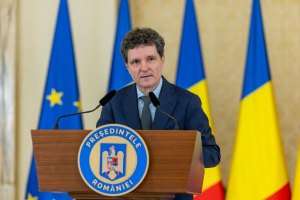
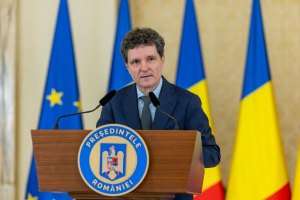
President Nicuşor Dan nominated MEP Eugen Tomac as his candidate for prime minister on June 4, banking on a technocratic cabinet capable of overcoming the deadlock between parliamentary parties. Ten days later, on June 14, Tomac resigned after finding that he could not muster the necessary political support from pro-European parties, especially due to the lack of a clear position from the PSD and UDMR. That same morning, the head of state appointed the liberal Adrian Veştea, president of the Braşov County Council and first vice-president of the PNL, in a move that immediately generated severe tensions within the PNL, where the party's own leadership rejected supporting the proposal, and the USR announced, through a resolution of the National Bureau, that it would not support this second nomination either.
The Veştea government, negotiated in the last resort with the support of the PSD and with votes promised by the AUR, was submitted to the investiture vote on the evening of June 22. The cabinet gathered only 189 votes out of the 233 needed, after the AUR parliamentarians left the plenary hall just before the vote, on the orders of the party's leader, George Simion. The failure marked the second government rejected by Parliament in two months (the first being the Bolojan government dismissed following the adoption of the censure motion on May 5) and forced the country's president to restart the procedure for appointing a prime minister from scratch.
However, due to the obvious friction between the PSD and the PNL, no solution was reached, and Parliament entered the summer recess on July 1, without a government in place, being led by the Bolojan interim government. Unlike the interim presidential mandate, where the Constitution imposes a three-month term, there is no time limit for the position of prime minister, and a dismissed government continues to manage current affairs until the oath-taking by a new Executive, which theoretically means that the political impasse could continue indefinitely.
• Five-month budget execution: deficit of 1.75% of GDP
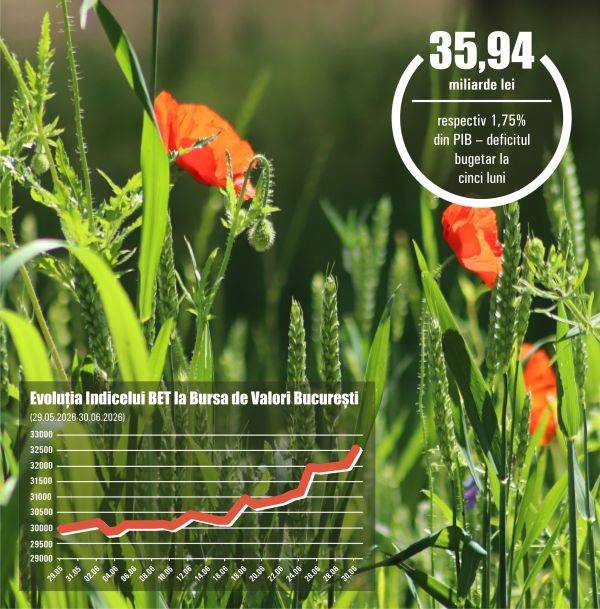
On June 25, the Ministry of Finance published the execution of the general consolidated budget as of May 31, 2026. The budget deficit stood at 35.94 billion lei, or 1.75% of GDP, compared to 64.23 billion lei (3.35% of GDP) in the same period of 2025 - a reduction of over 28.3 billion lei, equivalent to 1.60 percentage points of GDP. However, compared to the four-month execution, when the deficit was only 1.17% of GDP (23.95 billion lei), the evolution in May shows an acceleration of spending, a sign that the consolidation trajectory remains fragile and dependent on developments in the second half of the year.
Total revenues reached 279.49 billion lei, up 9.2% compared to the same period in 2025, with the share in GDP in advance of about 0.24 percentage points, supported mainly by revenues from VAT, payroll and income taxes, as well as property taxes. Total expenditures amounted to 315.43 billion lei, down 1.5% in nominal terms, with the share in GDP reduced from 16.7% to 15.3%. Personnel expenditures stood at 68.17 billion lei, down 2.9 billion lei compared to last year, their share in GDP falling to 3.3%. Expenditure on goods and services rose to 40.94 billion lei (+6.9%), on the back of higher healthcare payments, and interest expenses reached 26.81 billion lei. Public investments continued to increase, to 44.73 billion lei, compared to 40.57 billion lei in 2025, of which over 71% represented payments for projects financed from non-reimbursable external funds related to the 2021-2027 framework, including the PNRR. The amounts reimbursed by the European Union and external financing exceeded 24 billion lei, up by almost 10% compared to last year.
Interim Minister of Finance, Alexandru Nazare, stressed that the adjustment was not achieved by blocking investments, but through stricter control of current spending and a more efficient use of European funds, warning, however, that the second half of the year remains difficult, and discussions with rating agencies will weigh heavily. For the entire year 2026, the deficit target remains at 6.2% of GDP, compared to 7.7-7.9% of GDP in 2025, in the context of a financing need estimated at over 12% of GDP.
• Treasury and Fidelis: the state attracted almost 2.75 billion lei from the population in June
In addition to financing on international markets, the Ministry of Finance continued to borrow directly from the population in June, through the two government bond programs intended for individuals. The Tezaur edition, which ran from May 11 to June 4, ended with subscriptions of over 1.8 billion lei, made through 44,598 transactions, of which over 346 million lei were subscribed through the Ghişeul.ro platform, at non-taxable annual interest rates of 6.30% for a 1-year maturity, 6.90% for 3 years and 7.40% for 5 years. The ministry immediately launched, on June 8, a new Tezaur edition, valid until July 3, with slightly lower interest rates - 6.25%, 6.80% and, respectively, 7.25% per annum, for the same maturities of 1, 3 and 5 years.
On the Fidelis segment, listed on the Bucharest Stock Exchange, the Ministry of Finance launched, between June 15-22, the sixth edition of the year, with interests of up to 7.60% for lei securities (6.35% at 2 years, 6.90% at 4 years and 7.60% at 10 years) and up to 6.80% for those in euros, an edition also marked by the launch, on the occasion of International Blood Donor Day, of two special tranches dedicated to donors - one in lei, at 2 years, with an interest of 7.35%, the other in euros, at 10 years, with an interest of 6.80%, both with substantially reduced minimum subscription thresholds. However, the June issue was, according to market data, the second weakest Fidelis issue in the last five years, with the state managing to attract only approximately 940 million lei, half of the amount coming from euro-denominated securities. Analysts quoted by the economic press explained the moderation trend by increasing taxation, increasingly strong inflationary shocks and the fact that the interest rates offered were no longer increased by the Treasury.
Cumulatively, through the two programs, the Ministry of Finance attracted from the population, in the first six months of 2026, approximately 21.7 billion lei - 14.02 billion lei through the Treasury and 7.66 billion lei through Fidelis - an amount that, annualized, shows that the target of 60 billion lei proposed for financing from the population for the entire year is becoming increasingly difficult to achieve.
• Moody's warns: Political deadlock puts pressure on fiscal consolidation
Ratings agency Moody's warned, in a commentary published on June 26, that prolonged political uncertainty and the lack of a functioning parliamentary majority could affect both the fiscal consolidation process and the as well as the implementation of reforms undertaken by Romania. The agency estimated that interest payments could reach 9.2% of budget revenues in 2026 and 9.6% in 2027, amid high yields and rising public debt, and highlighted the country's vulnerability to exchange rate fluctuations, given that over half of public debt is denominated in foreign currency. Moody's also estimated that the PNRR implementation rate had reached around 70% after the last tranche approved by the European Commission, but warned that delays in forming a stable government could affect the completion of the remaining reforms and investments before the August 31, 2026 deadline. The analysis did not represent a rating action per se, but was interpreted as a clear warning signal, coming just a few weeks after S&P and Fitch had reconfirmed the country's sovereign rating, also amid the political crisis.
Finance Minister Alexandru Nazare responded that the major economic stake at the moment is avoiding a downgrade of the sovereign rating, recalling that the country was once at a vulnerable point and managed, through difficult measures, to avoid a dangerous scenario.
The pressure was also felt on the foreign exchange market: the leu remained, according to banking analysts, the weakest currency in the region this year, with the euro/leu exchange rate exceeding the threshold of 5.24 lei on the interbank market and setting a new record at the NBR fixing, of 5.2180 lei, and the yields required by investors for Romanian government bonds remained at the highest levels in the European Union, about one percentage point above the level at the end of February.
• The economy remains in technical recession
On June 5, the National Institute of Statistics revised upwards the estimate for the Gross Domestic Product for the first quarter of the year: the decrease in real terms was recalculated to 1.2% on the gross series (respectively 1.1% on the seasonally adjusted series) compared to the first quarter of 2025, from a minus of 1.7% and 1.5%, respectively, initially published. The nominal value of GDP on the gross series was estimated at 403.915 billion lei, and on the seasonally adjusted series at 497.820 billion lei. The GDP growth was contributed by construction (+0.4%) and the entertainment and recreational services sector (+0.3%), while trade, transport and HoReCa (-0.8%), information and communications (-0.3%) and industry (-0.2%) dragged the economy down. Household consumption, the main growth engine in recent years, fell by 1.8%, with a negative impact of 1.2 percentage points on GDP.
The deterioration was also acutely felt at the level of perception in the economy: the economic confidence indicator (ESI) calculated by the European Commission fell, according to an Erste Group Research analysis, to 83.5 points in June, from 90.8 points in May, the strongest monthly deterioration since the start of the COVID-19 pandemic and the largest annual decline in the entire European Union (-14.3 points compared to June 2025, almost twice as much as the next ranked country, Bulgaria, with -8.8 points). By comparison, the ESI average rose, in the same period, to 95.1 points in the EU and 95 points in the Eurozone. The largest decline came from the services sector, where the indicator fell to -23.8 points, from -6.3 points in May, and consumer confidence hit a 15-year low of -34.6 points. According to an analysis by the Concordia Employers' Confederation, the ESI and the consumer confidence sub-indicator reached levels comparable to those during the pandemic at the end of June and are approaching the thresholds reached during the 2009-2010 economic crisis. The economy remains, according to Erste, in technical recession territory for the 14th consecutive month, with a mild recession as the baseline scenario for the whole of 2026.
The INS also announced in June that the unemployment rate, in seasonally adjusted form, reached 6.4% in May 2026, up 0.1 percentage points from April. In fact, we have 522,100 people who do not have a job, and the monthly evolution of the unemployment rate shows a clear upward trend for the entire year, according to data from the INS.
• The Ukrainian drone in the Port of Constanta, a new security test in the Black Sea
A week after the crash of the Russian drone in Galaţi, Romania experienced a second security incident in June. On the morning of June 5, at 06:20, a naval drone of the type used in the war in Ukraine was spotted by the Maritime Coordination Center of the Romanian Naval Authority near Berth 78 in the Port of Constanta and exploded around 10:27-10:30, without causing any casualties. Three other drones from the same group self-detonated in the Black Sea, the last confirmation of their destruction coming only at 14:35. Authorities have preventively evacuated over 1,000 tourists from beaches in nearby resorts, within a 1 kilometer radius, and the Coast Guard, SRI and the intervention structures of the MApN, including the munitions neutralization (EOD) teams, acted to secure the area.
The Ukrainian Ministry of Defense later confirmed, following 14 questions officially addressed by the interim minister Radu Miruţă, that the four Sargan-3000 naval drones had lost communication with their operators since the afternoon of June 4, near Sevastopol, about 250 kilometers from the Romanian coast, most likely due to Russian electronic warfare, and the Ukrainian authorities informed the Romanian side about the danger of self-detonation only at 9.54 the next morning, shortly before the explosion. Romania requested Kiev to open a permanent technical communication channel between the naval forces of the two states and to schedule the self-detonation of the drones exclusively outside the Romanian areas of interest, in the event of loss of control. President Nicuşor Dan convened, the following weekend, a working meeting in Constanţa, at the headquarters of the 243rd Radioelectronics and Observation Brigade "Callatis", and reactions of solidarity and concern also came from Bulgaria, which supplemented its surveillance measures of its own Black Sea coast.
• DNA strikes at the heart of the former governing coalition: the Ciprian Ciucu case
The National Anticorruption Directorate announced in the middle of last month the placing under judicial control and, subsequently, the indictment of the mayor of Sector 6 in Bucharest, Ciprian Ciucu (one of Ilie Bolojan's closest political allies) for bribery, in a case related to advertising and electoral consultancy services, provided between November and December 2025, received, according to investigators, from two businessmen, in connection with administrative procedures regarding a real estate project in Bucharest pending at the Sector 6 City Hall. In the same case, the judge of rights and freedoms ordered, on June 17, the preventive arrest for 30 days of two other defendants, accused of bribery, respectively complicity in bribery, complicity in bribery and instigation of the use of information not intended for publicity. Ciucu rejected the accusations, declared himself innocent and announced that he would serve out his term.
The month also brought other large-scale DNA cases, including a tax evasion network in the courier sector, with damage estimated at over 50 million lei, dismantled by prosecutors in Timisoara, as a result of which six people were detained and amounts of over 351,000 lei and 37,050 euros were seized, as well as several corruption cases targeting police officers and civil servants from Buzău, Olt and Dolj counties.
• PNRR, under pressure of the August 31 deadline
The European Commission approved, in June, Romania's fourth payment request from the PNRR, worth 2.62 billion euros, a step that contributed to increasing the program's implementation rate to approximately 70%, according to Moody's. In parallel, the authorities continued to adopt exceptional mechanisms for the phased reception of PNRR projects, approved by the Senate at the proposal of the Minister of Development, Cseke Attila, in the context of renegotiations with the European Commission to accelerate the reception of works. Over 11,000 projects financed through the PNRR and other European programs were, at the end of the month, in various stages of execution, and the risk of losing funds, in the absence of a Government with full powers capable of adopting emergency regulations and ordinances, remained a central concern for European institutions and rating agencies.















 Euro
Euro Dolar SUA
 Franc elveţian
 Liră sterlină
 Gram de aur