English

NATO wants to build an integrated industrial ecosystem, capable of operating in peacetime and quickly transforming into a war economy when the strategic situation requires it, it emerged yesterday after the Defense Industry Forum, held on the sidelines of the summit taking place in Ankara, Turkey. According to the concept outlined at the Alliance's summit, satellites, drones, standardized ammunition, air defense systems, early warning aircraft, critical raw materials and new industrial cooperation platforms are only the visible components of a much broader transformation, through which the Alliance tries to ensure not only its technological superiority, but also the ability to produce quickly and coordinated enough to face a long-term conflict. In this new model, military power will be measured not only by the number of tanks, planes or ships in service, but also by the capacity of Western economies to sustain, in the long term, the pace imposed by the strategic competition between the great powers.
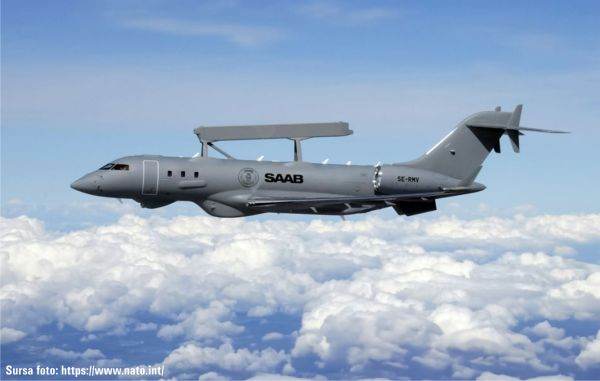
It is from this perspective that the package of initiatives presented yesterday in Ankara by NATO Secretary General, Mark Rutte, and Deputy Secretary General, Radmila Shekerinska, must be viewed. In just a few hours, the Alliance announced investments of over $40 billion to develop counter-drone systems over the next five years, the launch of the HALO project to create a common constellation of military satellites, the expansion of the STARLIFT and Alliance Persistent Surveillance from Space space initiatives, the development of a standard NATO 155-millimeter munition, joint programs for long-range ground strike systems, the purchase of hundreds of Patriot missiles, the replacement of the current AWACS early warning fleet with Saab GlobalEye aircraft, and the launch of platforms through which the defense industry will be more effectively connected to Alliance projects.
Seen separately, these projects seem like separate initiatives. However, analyzed together, they describe the beginning of an unprecedented structural transformation. For the first time after decades in which each state developed almost exclusively its own national programs, NATO is trying to create a common defense industry market, in which member states produce together, purchase together, and complement each other's industrial capabilities. The goal is to reduce production times, standardize equipment, reduce costs, and increase the resilience of supply chains at a time when geopolitical competition with Russia and China is becoming increasingly intense.
Perhaps the most important change is that NATO is starting to treat the defense industry as a strategic infrastructure, not just as a supplier of military equipment. The new approach involves identifying available production capacities in all member states, connecting them in a common network, and using them according to the Alliance's needs. Thus, if one factory has unused capacity and another is overburdened, production would be redistributed much more quickly, reducing the delays that have affected numerous military programs in recent years. At the same time, NATO is trying to simplify access for companies, including small and medium-sized enterprises, to Alliance contracts and projects, expanding the industrial base available for future endowment programs.
Equally important is the economic dimension of the transformation. In recent years, the global defense industry market has experienced one of the fastest growth periods in decades, amid increasing military budgets in Europe, North America and the Indo-Pacific region. The European NATO member states alone have announced investment programs worth hundreds of billions of euros to modernize their armed forces, and estimates of demand for ammunition, anti-aircraft systems, drones and sensors indicate an unprecedented level for the next ten years. In this context, competition will no longer be fought only between armies, but also between industries capable of delivering the necessary equipment quickly and consistently.
For Romania, the decisions adopted in Ankara have a special significance. Our country is among the eleven states that will participate in the joint acquisition of Saab GlobalEye aircraft, NATO's future airborne early warning and control system, intended to replace the current Boeing E-3 AWACS aircraft in service with the Alliance since the 1980s. The program is one of the most important launched at the forum, as GlobalEye offers simultaneous surveillance capabilities of air, land and maritime space, detection of drones, ballistic and cruise missiles, as well as real-time transmission of the operational image to NATO command structures.
For a state located on the Black Sea and on the eastern flank of the Alliance, access to such a capability has obvious strategic value.






















 Euro
Euro Dolar SUA
 Franc elveţian
 Liră sterlină
 Gram de aur